
Olearia albida
Olearia albida (Hook. f.) Hook. f.
Description
Growing requirements
Olearia albida is a species of evergreen shrub belonging to the Asteraceae family. Native to New Zealand, this plant is naturally found in coastal areas and lowland forests, where it thrives in diverse soil conditions.
The plant requires full sun to maintain its compact growth habit and silvery foliage density. It is highly adaptable to various soil types but insists on excellent drainage; waterlogged soils will inevitably damage the root system over time.
Climatically, this species prefers mild conditions and is well-known for its high tolerance to wind and salt spray, making it a premier choice for coastal gardening. It is generally sensitive to severe frosts and prefers sheltered spots in colder regions.
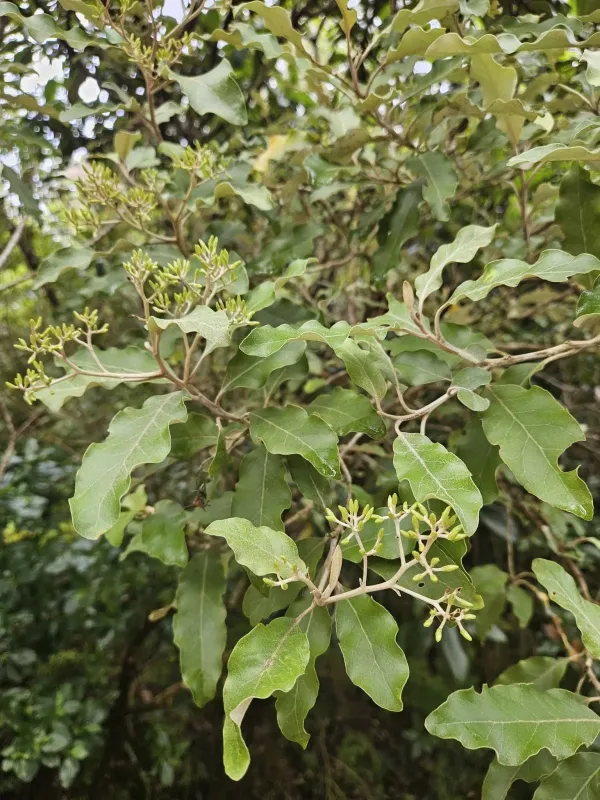
Botanically, the plant is recognized by its oblong leaves covered with a dense, white-silvery tomentum on the undersides. The inflorescences are composed of small, white daisy-like flower heads that create a pleasant visual effect during the blooming season.
In agricultural and landscaping contexts, it is primarily used for windbreaks, hedging, and restoration of coastal ecosystems. Its ability to tolerate clipping and pruning makes it a versatile structural plant for modern gardens.
Main diseases and pests
Root rot is the most significant threat to the plant's survival, usually triggered by heavy soils that do not drain well. Planting on slightly raised mounds can help mitigate the risk of fungal infections in the root zone.
Scale insects and mealybugs can occasionally infest the stems and leaves, especially if the plant is grown in a stressed environment. Manual removal or application of horticultural oils is usually effective for managing these pests.
Powdery mildew may occur if the planting density is too high or if the foliage remains wet for extended periods in humid climates. Ensuring adequate airflow between plants is the best natural preventive measure.
During periods of high humidity and poor ventilation, foliage might succumb to bacterial spotting. It is recommended to keep the base of the plant free from debris and fallen leaves to prevent the build-up of inoculum.
Overall maintenance including light pruning helps to keep the plant vigorous, reducing the susceptibility to opportunistic diseases. Monitoring the plant throughout the growing season is essential for early detection of potential threats.