
Musk daisy bush
Olearia moschata Hook. f.
Description
Growing requirements
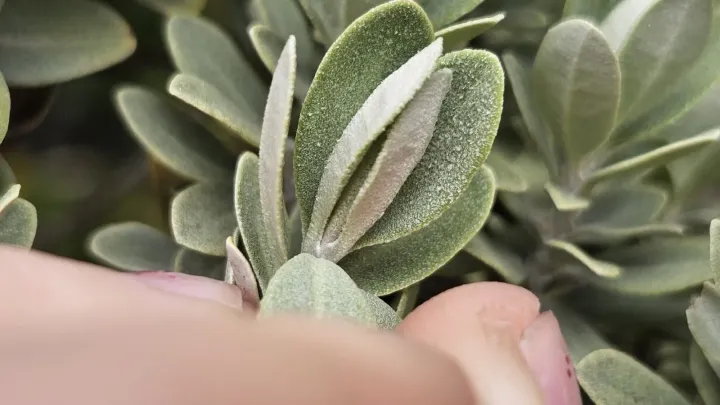
Musk daisy bush is a dense evergreen shrub belonging to the Asteraceae family. Native to the mountainous regions of New Zealand, it is prized in horticulture for its silver-grey foliage and a distinct, musky scent emitted by leaves.
The plant thrives in full sun, which is essential for maintaining its compact growth habit and vibrant leaf colour. It is adapted to cool, alpine environments and performs best in regions with moderate temperatures and good air movement.
Well-drained soil is the most critical requirement for successful cultivation. The species is highly sensitive to waterlogged conditions, which can lead to root rot; therefore, planting in rocky or sandy substrates is often recommended.
While mature plants can tolerate short periods of dryness, they benefit from regular watering during the first few growing seasons. It is important to ensure the soil remains moist but never saturated to prevent physiological stress.
In terms of maintenance, light pruning is suggested to remove dead wood and encourage denser branching. This should be performed after the flowering period to ensure the shrub retains its aesthetic appeal and structural integrity.
Main diseases and pests
The primary threat to Olearia moschata is root rot, typically caused by poor soil drainage or excessive soil moisture levels throughout the winter months.
Fungal leaf spots can occur if the plant is grown in areas with poor ventilation or high humidity, as the dense foliage may trap moisture and create a microclimate for pathogens.
Aphids are the most common insect pests that target new, succulent growth. They can cause leaf curling and attract sooty mold if not treated promptly.
Scale insects may occasionally appear on the stems, requiring manual removal or application of systemic horticultural oils to prevent long-term damage.
To mitigate these risks, gardeners should prioritize site selection with excellent airflow and strictly monitor moisture levels to ensure the plant remains in an optimal state of health.