
Holly-leaved daisy bush
Olearia ilicifolia Hook. f.
Description
Growing requirements
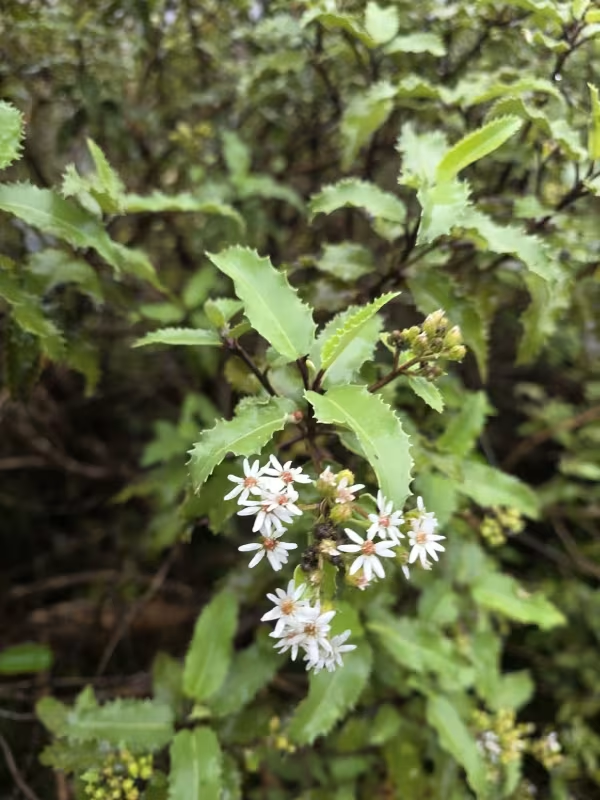
Olearia ilicifolia, commonly known as the Holly-leaved daisy bush, is an evergreen shrub belonging to the Asteraceae family. It is native to the mountainous regions of New Zealand, where it is valued for its hardiness and distinctive, saw-toothed foliage.
The plant thrives in cool, moist climates and requires a position in partial shade, especially in areas with hot summers. It is best suited for coastal or highland environments where humidity remains consistent throughout the growing season.
Optimal growth is achieved in well-drained, fertile soil that remains moist but not waterlogged. Heavy soils should be amended with organic compost and grit to ensure proper drainage, as the roots are susceptible to rot under saturated conditions.
Cultural practices include periodic pruning to maintain a dense shape and promote flowering. It is relatively frost-hardy once established, but young specimens may require protection from severe, drying winds and hard frosts during their first winter.
Its primary agricultural and horticultural application is as an ornamental shrub in landscaping. It serves well as a specimen plant, a backdrop in mixed shrub borders, or as a structural element in native-themed gardens due to its unique texture.
Main diseases and pests
The Holly-leaved daisy bush is prone to root rot if grown in heavy, poorly drained soil, which is the most frequent cause of plant decline in garden settings.
Pest issues are generally minimal but can include infestations of aphids or spider mites, particularly during periods of environmental stress or drought.
Fungal diseases, such as powdery mildew, may occur if the shrub is planted in a location with poor air circulation, necessitating thinning of the canopy.
Monitoring the health of the plant during the early stages of the growing season is crucial for identifying early signs of pest activity or nutrient deficiencies.
Integrated pest management strategies, such as using horticultural oils or improving environmental conditions, are usually sufficient to control typical infestations.