
Common Twayblade
Neottia ovata
Description
Growing requirements
The Common Twayblade (Neottia ovata) is a perennial herbaceous plant belonging to the Orchidaceae family. While not an agricultural crop in the traditional sense, it is of great interest for botanical research and conservation programs aimed at protecting natural meadow ecosystems.
The species prefers moist, nutrient-rich soils with a neutral to slightly alkaline pH level. It thrives in locations such as deciduous forests, forest edges, damp grasslands, and scrubland, where the microclimate provides sufficient shade and steady moisture levels.
A fundamental biological requirement for Neottia ovata is the presence of specific mycorrhizal fungi in the soil. These fungi form a symbiotic relationship with the orchid's roots, facilitating nutrient uptake which is critical during the initial growth stages of the plant.
Its natural range extends across temperate Europe and Asia, demonstrating a wide tolerance to varying climate conditions. The plant has adapted to survive in regions with distinct seasonal changes, though it is highly sensitive to significant changes in local moisture regimes.
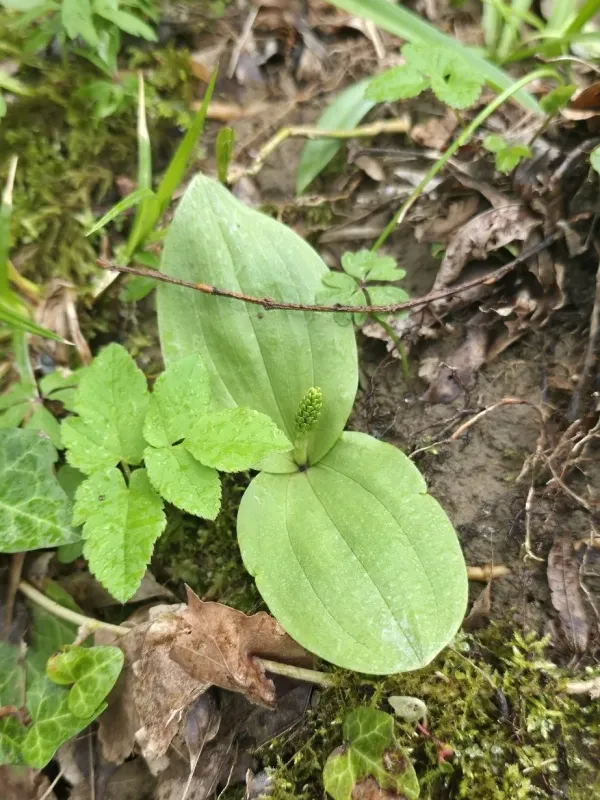
Botanically, the plant is characterized by two distinct oval leaves at the base of the stem. The inflorescence consists of a long, slender spike bearing small yellow-green flowers, which are specifically adapted for pollination by various small insects.
Main diseases and pests
The primary threats to Common Twayblade populations involve habitat destruction due to land drainage and intensive agricultural land use. The loss of damp soil conditions leads to the rapid decline of individual plants.
Pathogenic fungi can pose a risk, particularly in waterlogged conditions where poor aeration facilitates the development of root rots. Such diseases severely weaken the plant's ability to maintain its symbiosis with the necessary mycorrhizal fungi.
Insects and slugs can cause physical damage to the leaves and developing inflorescences, thereby reducing the chances of successful flowering and seed production in a given season.
Chemical pollutants, including nitrogen-heavy fertilizers and broad-spectrum herbicides, are extremely harmful to this orchid. These substances disrupt the delicate soil microbiota required for the plant's survival.
Conservation efforts prioritize the protection of undisturbed habitats. Because the species depends on complex ecological interactions, restoring it in artificial environments without the necessary soil fungi is currently not feasible for commercial production.