
Neottia acuminata
Neottia acuminata
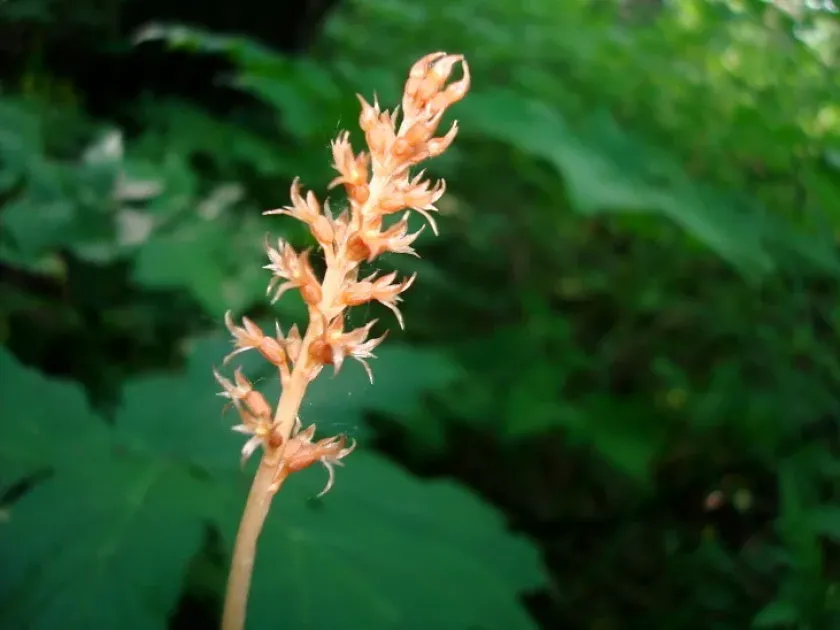
Description
Growing requirements
Neottia acuminata is a species belonging to the Orchidaceae family. It is a perennial herbaceous plant known for its myco-heterotrophic lifestyle, meaning it relies entirely on symbiotic soil fungi for nutrition rather than photosynthesis.
The native distribution area of this orchid is concentrated in the mountain forests of East Asia, primarily across China and the Himalayan regions. It thrives in dense, shaded forest environments with high moisture levels and rich organic humus layers.
In agriculture, this plant is not considered a crop or a commercial species. Its extreme biological dependence on specific mycorrhizal fungi makes cultivation outside its natural ecosystem currently impossible and biologically impractical.
Morphologically, the plant features scale-like leaves wrapped around a succulent stem. The root system consists of dense, tangled roots that resemble a nest, which is a characteristic feature of the Neottia genus.
There are no established agricultural techniques for this plant, as it cannot be grown in standard farming conditions. Its primary value is purely ecological and scientific, as it serves as an indicator of healthy, undisturbed forest environments.
Main diseases and pests
The primary threats to Neottia acuminata include deforestation, habitat fragmentation, and changes to forest soil composition. Any disruption to the fungal network in the soil directly leads to the senescence and death of the plant population.