
Neottia bifolia
Neottia bifolia
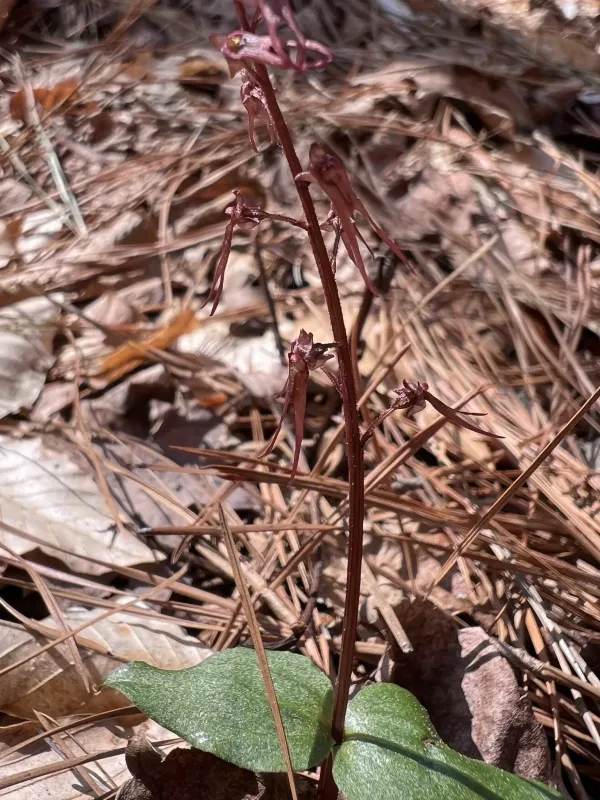
Description
Growing requirements
Neottia bifolia is a fascinating member of the Orchidaceae family, recognized for its specialized mycoheterotrophic nature. Unlike standard crops, this plant relies entirely on underground fungal networks to obtain its nutritional requirements throughout its life cycle.
The natural habitat of this species is primarily deep forest zones. It thrives in shaded, cool environments where a stable microclimate is maintained by the forest canopy and a thick layer of decomposing leaf litter.
Soil requirements are highly specific, favoring substrates rich in organic matter and fungal biomass. The plant cannot be cultivated in standard agricultural settings because it requires a precise symbiotic partnership with mycorrhizal fungi to survive.
Climatic preferences include consistent humidity and moderate temperatures. It is highly sensitive to fluctuations in environmental conditions, which can disrupt the delicate balance between the orchid and its fungal host.
Due to its biological complexity, Neottia bifolia is categorized as a specialized wild plant rather than an agricultural commodity, and attempts at large-scale propagation have not yielded viable results.
Main diseases and pests
Habitat destruction remains the most significant threat to the survival of Neottia bifolia. Deforestation and land development destroy the specific micro-ecosystems needed for the plant and its associated fungi to flourish.
Soil compaction, often caused by heavy forestry machinery or human activity, damages the fragile underground connections, effectively cutting off the plant's nutrient supply and causing rapid decline.
Pathogenic fungi that specifically target orchid mycorrhiza can significantly decrease local populations. When the symbiont dies, the orchid follows suit immediately, as it cannot photosynthesize effectively on its own.
Changes in local water tables due to landscape modification pose a major risk to this species, as it requires stable soil moisture levels throughout the growing season to maintain its physiological functions.
Conservation efforts for this species focus primarily on protecting its natural habitat from disturbance, as traditional agricultural interventions like fertilization or irrigation are ineffective and often harmful to the plant.