
Neottia banksiana
Neottia banksiana
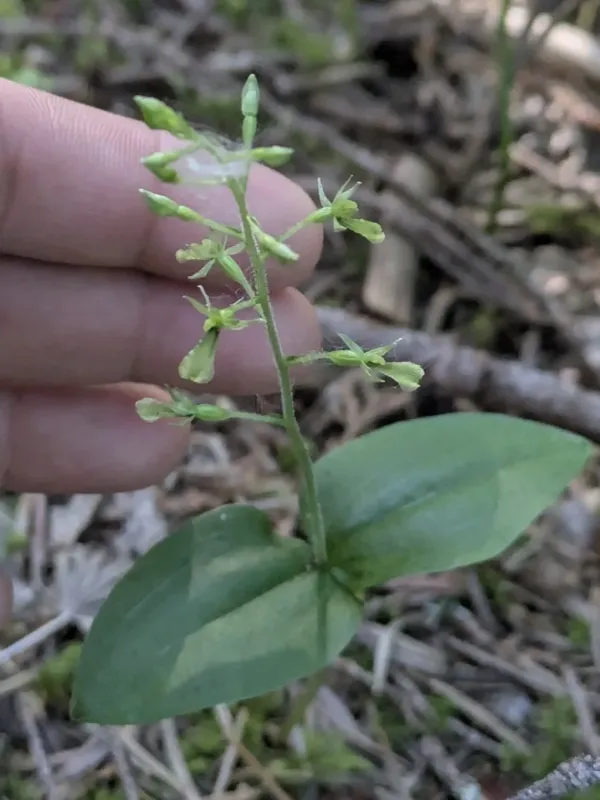
Description
Growing requirements
Neottia banksiana is a fascinating member of the Orchidaceae family, commonly recognized as a mycoheterotrophic plant. It lacks chlorophyll and relies entirely on a complex symbiotic relationship with specific soil fungi to obtain carbon and nutrients.
The native range of this species is primarily concentrated in the northern regions of North America. It is typically found in deep, moist forest litter within coniferous or mixed woodland environments where environmental stability is high.
Botanically, the plant is characterized by its fleshy, nest-like root mass, which facilitates its connection to the underground fungal network. The flowering stalk is generally pale or brownish, emerging briefly during the growing season to produce seeds.
This species has strictly specific requirements for its substrate, demanding an undisturbed organic layer rich in mycorrhizal fungi. Due to this specialized biological dependency, it cannot be cultivated in standard agricultural or horticultural systems.
In terms of хозяйственного (economic) use, Neottia banksiana has no agricultural application. It is strictly a wild species that plays a niche role in the forest ecosystem, requiring total protection from human disturbance to survive.
Main diseases and pests
The primary threat to the survival of Neottia banksiana is the loss of natural forest habitats caused by logging and land development. Any disturbance to the leaf litter and forest floor disrupts the delicate fungal symbiosis necessary for growth.
Environmental shifts, including climate change-induced moisture loss, significantly impact the survival of the soil fungi, which indirectly leads to the decline of the orchid population.
Invasive species and soil compaction caused by human activity are significant threats that degrade the environment. The plant is extremely sensitive to chemical changes in the soil, which can easily kill the host fungi.
While specific agricultural pests are not an issue as the plant is not a crop, native herbivores may occasionally browse on the flowering stems, affecting the plant's reproductive success in fragile populations.
Conservation strategies focus on the total protection of forest sites. There is no commercial agrotechnique for disease or pest control, as preserving the integrity of the ecosystem is the only method to prevent extinction.