
Nemesia hybrid
Nemesia caerulea x Nemesia strumosa
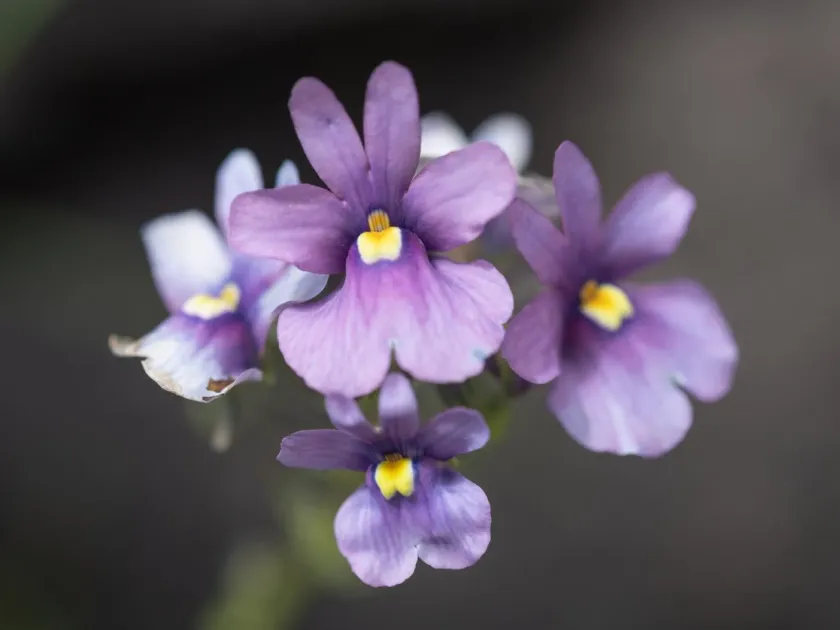
Description
Sowing dates
Nemesia hybrid is propagated mainly by seeds. Sowing for seedlings is carried out at the end of March or early April, which allows obtaining blooming plants by the beginning of summer.
The seeds of nemesia are very small in size, so they are not buried in the soil, but only slightly pressed into the moistened surface of the substrate to ensure tight contact.
For germination, seeds require a stable temperature of about 18-20 degrees Celsius and high humidity, so containers are covered with transparent film or glass.
Seedlings are pricked out when two true leaves appear, trying not to injure the delicate root system, which does not tolerate transplantation well.
The established seedlings are planted in open ground only after the threat of night frosts has passed, maintaining a distance of about 20-25 centimeters between plants.
Growing requirements
The crop belongs to the Scrophulariaceae family and is the result of breeding species originating from South Africa. The plant prefers well-lit areas with light shading during the afternoon hours.
The soil for nemesia must be loose, moderately fertile, and have excellent drainage, as stagnant moisture is detrimental to the root system.
The watering regime must be regular but moderate, avoiding both the drying out of the root ball and waterlogging of the plot, which causes root rot.
During the active vegetation period, the plant responds positively to feeding with complex mineral fertilizers with low nitrogen content to stimulate flowering rather than leaf growth.
Nemesia is a fairly cold-hardy crop, however, at extremely high temperatures and dry air, flowering may temporarily stop.
Main diseases and pests
The main enemy of nemesia is considered to be root rot, which occurs when the watering regime is violated and when using heavy, poorly aerated soil mixtures.
Under conditions of high humidity and stagnant air, plants can be affected by powdery mildew, which requires immediate removal of damaged parts and treatment with fungicides.
Among pests, the spider mite is most often found in plantings, which actively reproduces in hot and dry summers, sucking juices from the leaves.
Aphids can also cause damage by settling on young shoots and flower stalks, leading to their deformation and a decrease in the decorative qualities of the nemesia.
To prevent pest infestation, it is necessary to maintain optimal cleanliness in the plot and avoid excessive density of plantings, ensuring good ventilation.