
Narrow-leaved ash
Fraxinus angustifolia Vahl
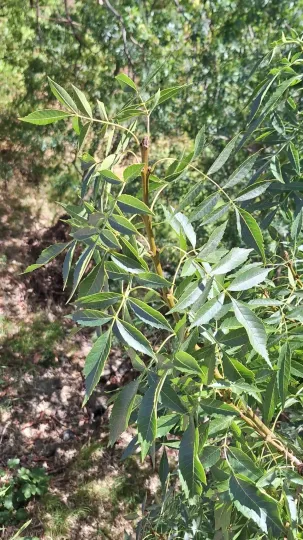
Description
Growing requirements
The Narrow-leaved ash (Fraxinus angustifolia Vahl) is a species of tree in the olive family (Oleaceae), native to central and southern Europe, North Africa, and western Asia.
This tree thrives in deep, fertile, and moist soils, typically occurring naturally in riparian and floodplain forests, showing remarkable tolerance to occasional waterlogging.
It requires high levels of solar radiation to maintain its growth rate. In silviculture, it is preferred to plant them in open spaces or where they can receive full canopy exposure.
The climate requirements include mild to moderate temperatures. While it has some frost tolerance, young specimens are susceptible to late spring frosts and benefit from sheltered conditions during their establishment phase.
Botanically, it is distinguished by its pinnate leaves with narrow, lanceolate leaflets. The root system is deep and vigorous, allowing the tree to withstand strong winds and establish itself firmly in a variety of substrates.
Yield
The primary economic value of the Narrow-leaved ash lies in its timber, which is renowned for its strength, toughness, and elasticity, making it highly sought after in the furniture and woodworking industry.
The wood is frequently utilized for manufacturing tool handles, sports equipment, and premium flooring, as it resists impact and mechanical stress better than many other temperate hardwoods.
In forestry, it is often employed in mixed-species plantations to improve forest structure and promote rapid biomass accumulation, which assists in carbon sequestration efforts.
Landscape professionals use the Narrow-leaved ash for urban forestry and parks because of its adaptability to diverse soil types and its aesthetic, light-filtering canopy.
Environmental benefits include its role in soil stabilization along riverbanks and its capacity to enhance the humus layer, contributing to long-term soil health and ecosystem productivity.
Main diseases and pests
The major health risk for this species is Ash Dieback disease (Hymenoscyphus fraxineus), which causes crown dieback and has devastated ash populations across much of its native range.
Pest threats include the Emerald Ash Borer, a wood-boring beetle that poses a lethal risk by tunneling through the vascular tissue and causing rapid tree decline.
Management strategies involve rigorous sanitation practices, including the removal of infected wood, and the monitoring of sapling nurseries for early signs of fungal infection or larval damage.
Wildlife impact, particularly from deer browsing on young bark and shoots, can severely stunt tree development and introduce secondary pathogens into the woody stems.
To ensure healthy growth, foresters emphasize the importance of genetic diversity in plantings and maintaining optimal moisture levels to prevent physiological stress that makes trees more vulnerable to pests.