
Hoop-petticoat daffodil
Narcissus romieuxii Braun-Blanq. & Maire
Description
Growing requirements
Narcissus romieuxii is a rare and distinct bulbous plant belonging to the Amaryllidaceae family. Originating from the Atlas Mountains in Morocco, this species is well-adapted to high-altitude rocky environments, making it a prized specimen for alpine enthusiasts.
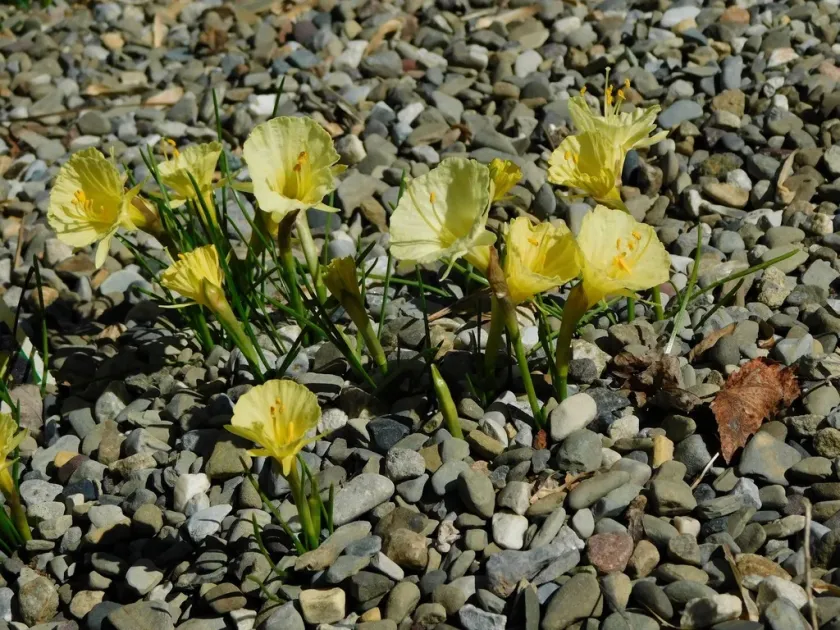
The plant is botanically recognized by its early flowering habit and unique morphology, featuring a large, funnel-shaped corona and narrow, elegant petals. The foliage is typically slender and grass-like, appearing in late winter to early spring.
Optimal growth requires a well-drained, gritty soil mix. In cultivation, it thrives best when given a period of distinct growth followed by a dry, warm dormant season. If the bulbs remain too wet during the summer, they are prone to rapid decay.
Temperature management is critical for this species. It prefers cool, frost-free environments during the winter. Greenhouse or cold frame cultivation is highly recommended in regions where winter rainfall is excessive or temperatures drop significantly below zero.
Horticulturally, this daffodil is primarily utilized for show collections, alpine houses, and specialized rock garden displays. Its delicate appearance and early season color provide a significant decorative value for professional gardeners and hobbyists alike.
Main diseases and pests
The primary threat to the health of Narcissus romieuxii is basal rot, usually triggered by stagnant water in the soil during the summer dormancy. Proper drainage is the most effective preventative measure against such fungal diseases.
Pests such as narcissus flies and bulb mites can be detrimental if not monitored. Utilizing healthy, certified planting material and maintaining good hygiene in the greenhouse are essential strategies for protecting the bulb stock from infestation.