
Cyclamen-flowered narcissus
Narcissus cyclamineus DC.
Description
Growing requirements
The cyclamen-flowered narcissus (Narcissus cyclamineus) is a member of the Amaryllidaceae family. It is a distinctive perennial bulbous plant native to Portugal and northwestern Spain, where it typically thrives in damp, acidic soils near stream banks.
The plant requires specific environmental conditions to flourish, primarily preferring sites that offer partial shade and consistent moisture during its spring growing season. It performs exceptionally well in woodland gardens where natural leaf litter provides necessary humus.
Soil structure is critical for this species; it must be well-draining but never fully dry. Amending heavy clay soils with organic matter like compost or leaf mold is highly recommended to improve aeration and nutrient availability for the bulbs.
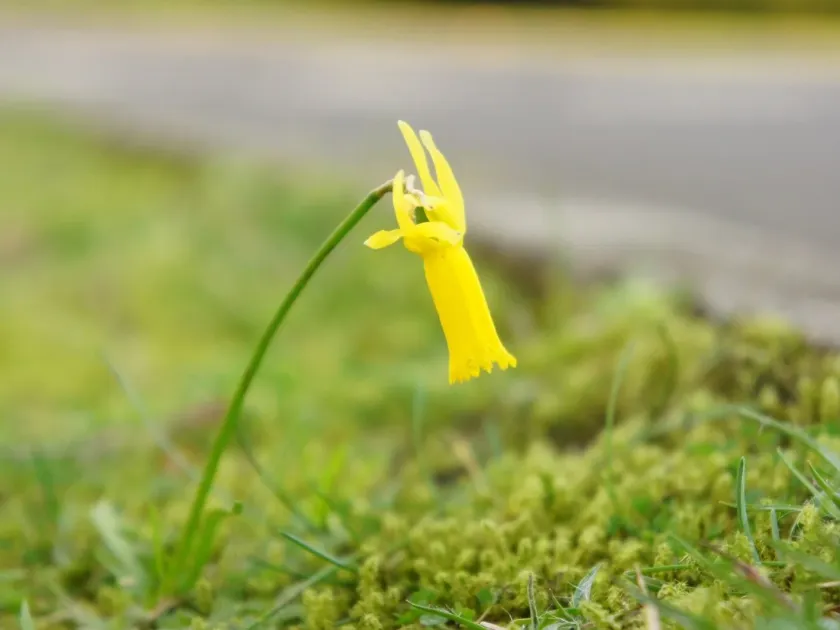
Botanically, this narcissus is noted for its early blooming period and unique flower morphology, where the tepals are reflexed backwards, resembling the flowers of Cyclamen persicum. The corona is long, narrow, and tubular, creating an elegant, nodding appearance.
In terms of agricultural use, this species is primarily an ornamental crop used for rock gardens, naturalizing under trees, and early-season container arrangements due to its compact size and high adaptability to semi-shaded settings.
Main diseases and pests
The most significant pest affecting this crop is the Narcissus bulb fly (Merodon equestris). Its larvae burrow into the bulb, causing severe damage and often leading to plant death if not treated early with appropriate insecticides.
Fungal pathogens such as Fusarium basal rot represent a constant threat, especially if the bulbs remain in waterlogged soil during the summer dormancy phase, which is when the plant is most vulnerable to rot.
Viral diseases can also manifest as yellow streaking or mosaic patterns on the foliage, which significantly reduces the plant's vigor and leads to poor flower production over consecutive seasons.
Nematodes, specifically Ditylenchus dipsaci, can cause internal tissue damage, leading to stunted growth and deformed foliage, which is often difficult to eradicate once a planting area becomes infested.
Integrated pest management strategies should focus on ensuring high-quality, disease-free planting stock and maintaining optimal soil drainage to minimize the risk of infection and pest colonization.