
Red matipo
Myrsine australis (A. Rich.) Allan
Description
Growing requirements
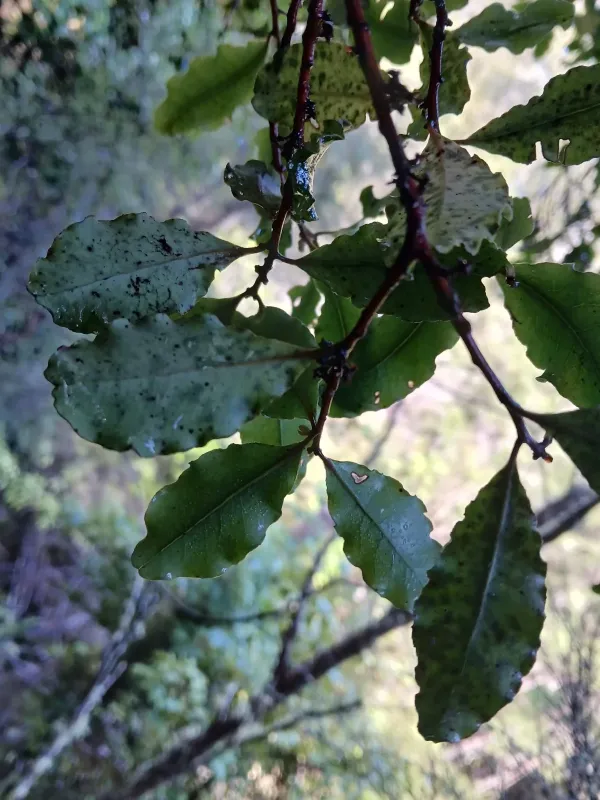
Myrsine australis, commonly known as Red matipo, is an evergreen shrub native to New Zealand. It belongs to the Primulaceae family and is well-regarded for its distinctive wavy-edged leaves and reddish stems.
This species thrives in temperate climates, showing good adaptability to coastal conditions. It prefers locations with partial shade but can tolerate full sun provided the soil moisture remains consistent throughout the growing season.
Successful cultivation requires fertile, well-draining soil. It is crucial to avoid heavy clays that hold excess water, as the root system of the Red matipo is sensitive to waterlogging and subsequent oxygen deprivation.
Cultural practices involve minimal pruning, primarily to maintain a desired shape or to remove dead branches. The shrub is prized for its year-round aesthetic appeal, making it a staple in temperate landscaping projects.
As a versatile plant, Myrsine australis is often used for ornamental hedging, screening, or as a contrasting element in mixed shrub borders where its dark foliage can stand out against lighter backgrounds.
Main diseases and pests
The primary threats to Myrsine australis include fungal root rot pathogens, which often emerge when soil drainage is poor. Ensuring adequate soil structure is the best preventative measure against these infections.
Pest issues frequently involve scale insects and mealybugs, which may colonize the stems and undersides of leaves. These pests sap the plant's energy and can cause stunted growth if left unmanaged.
Leaf spots caused by various fungi can occur in humid environments with poor air circulation. Thinning out the center of the plant is recommended to improve airflow and reduce humidity levels.
Standard pest management involves applying horticultural oils or systemic insecticides when infestation levels exceed economic thresholds. Early identification is key to effective control.
In addition to biotic threats, the plant may suffer from physiological stress if exposed to harsh, drying winds or severe late-season frosts, which can scorch the foliage.