
African boxwood
Myrsine africana L.
Description
Growing requirements
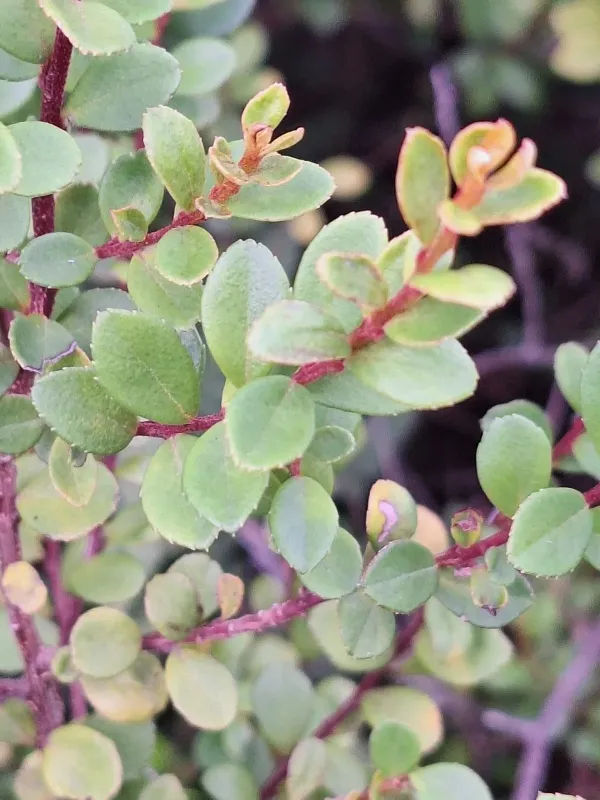
African boxwood (Myrsine africana L.) is an evergreen shrub belonging to the Primulaceae family. It is widely recognized for its dense growth habit, deep green leathery foliage, and reddish stems, making it an excellent candidate for decorative landscaping and hedging.
The species originates from parts of Africa and Asia, where it thrives in diverse habitats. It generally prefers well-drained, slightly acidic soil enriched with organic matter. Proper aeration is crucial for the healthy development of its root system.
For optimal growth, the plant requires bright, indirect sunlight. While it is tolerant of partial shade, insufficient light levels can lead to elongated, weak stems and a loss of its characteristic compact shape.
Temperature management is vital, as this plant is not fully frost-hardy. It thrives in moderate temperatures and should be protected from extreme heat or freezing conditions, often kept in containers to allow for indoor migration during winter.
Watering should be balanced; the soil must remain consistently moist but never waterlogged. Regular monitoring of the drainage system is necessary, especially for potted specimens, to avoid the risk of root suffocation.
Main diseases and pests
Scale insects are a primary pest, often settling on stems and undersides of leaves. Regular cleaning and application of horticultural oils are typically effective methods for managing these populations before they spread.
Spider mites can become a significant nuisance, particularly in environments with low humidity. Increasing the air humidity around the plant and frequent light misting can help prevent infestations.
Root rot remains the most serious threat to the vitality of the plant, often resulting from improper watering practices or heavy, non-porous soil media. Once root damage occurs, the plant's recovery is slow and often difficult.
Fungal leaf spots may appear if the foliage stays wet for extended periods in stagnant air. Proper spacing and good airflow are essential components of a preventative strategy against these infections.
Nutritional deficiencies, manifesting as leaf chlorosis, are common if the soil pH shifts away from the preferred acidic range. Soil testing and the use of balanced, micronutrient-enriched fertilizers are recommended for long-term health.