
Monstera tenuis
Monstera tenuis
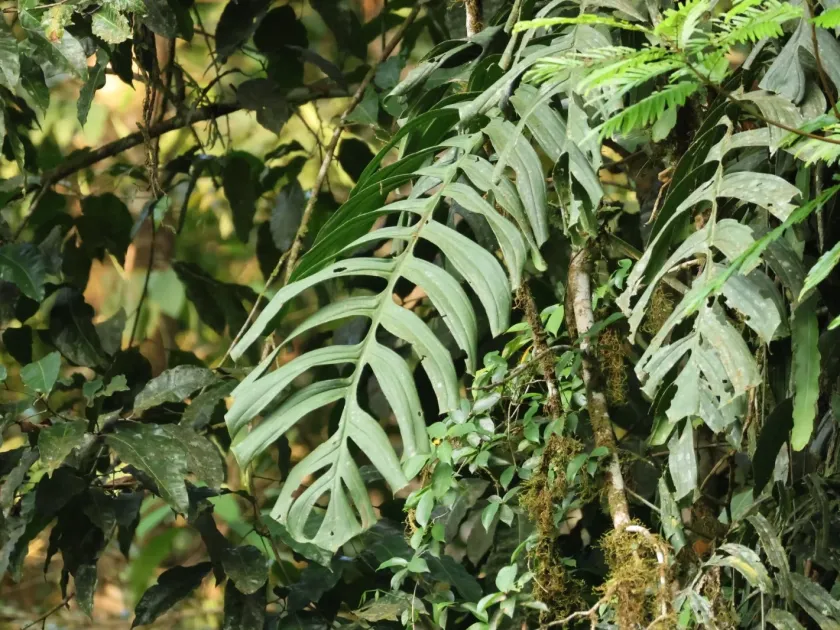
Description
Growing requirements
Monstera tenuis is a rare species belonging to the Araceae family, native to the tropical rainforests of Central and South America. In its natural habitat, it functions as a climbing epiphyte, scaling the trunks of large trees to reach the canopy layer where sunlight is more abundant.
Botanically, this species is distinguished by its dramatic leaf metamorphosis. As the plant matures, the leaves transform from simple, entire shapes into complex, deeply pinnatifid forms. This aesthetic evolution makes it a highly prized specimen among botanical collectors and horticulturists focused on rare tropical plants.
Successful cultivation of this species requires a substrate that mimics the forest floor. A mixture of orchid bark, peat moss, perlite, and activated charcoal provides the necessary drainage and aeration. Maintaining a soil pH between 5.5 and 6.5 is optimal for nutrient uptake.
Environmental conditions are crucial; this species thrives in high humidity levels, ideally above 70%. It requires stable temperatures ranging from 18 to 25 degrees Celsius. Protection from direct sunlight is essential, as the foliage is highly prone to phototoxicity and burns when exposed to intense UV rays.
Agrotechnical practices involve regular, moisture-controlled irrigation, ensuring the substrate dries slightly between waterings. Fertilization with a balanced liquid fertilizer, diluted to half-strength, should be applied consistently during the growing season to support the development of its large leaf structure.
Main diseases and pests
Spider mites are a primary pest for Monstera tenuis, especially in indoor environments with low humidity. They congregate on the undersides of the leaves, where they suck sap and cause yellowing, eventually leading to stunted growth if left unmanaged.
Root rot is the most significant pathological threat to this culture. It is primarily caused by poor drainage or overwatering, creating an anaerobic environment where fungal pathogens like Pythium or Phytophthora can thrive and destroy the root system.
Mealybugs are another concern, as they hide in the junctions between leaves and stems. Their feeding weakens the plant and leaves behind honeydew, which often leads to the growth of unsightly sooty mold on the foliage surface.
Disease management involves the use of systemic fungicides and horticultural oils for pest control. Careful inspection of new leaves and stems is required to identify pest populations early before they reach a level that threatens the vitality of the plant.
Cultural control remains the most effective defense strategy. By providing adequate airflow and maintaining appropriate moisture levels in the root zone, the overall susceptibility of the plant to biological threats is significantly reduced during the cultivation process.