
Melocactus zehntneri
Melocactus zehntneri
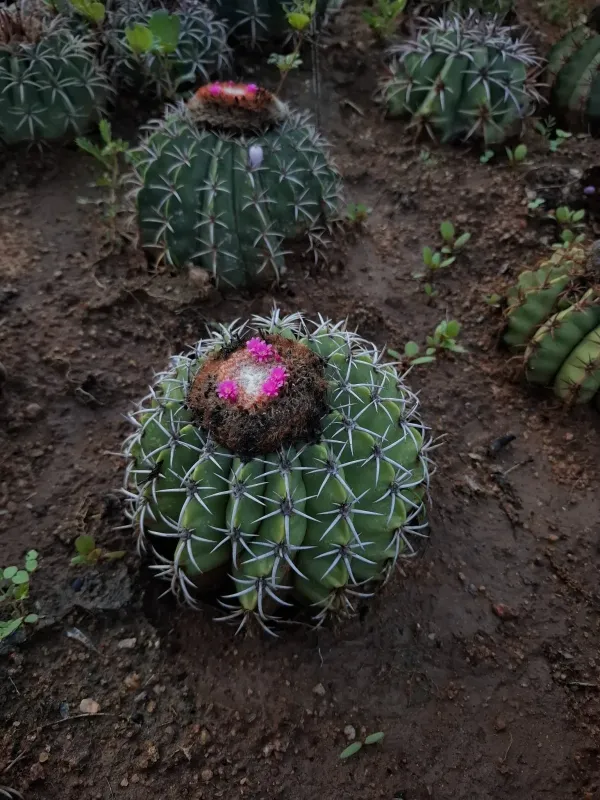
Description
Sowing dates
Sowing seeds of Melocactus zehntneri requires a stable temperature range between +25°C and +30°C. Using a sterile, sandy, and well-draining substrate is essential for successful germination.
Keep the sowing medium consistently moist but not waterlogged, covering the container with glass or plastic. Germination is typically a slow process that demands patience and regular ventilation.
Seedlings need diffused bright light as soon as they emerge to prevent etiolation. Avoid exposing them to direct, harsh sunlight until they reach a more robust juvenile stage.
Transplanting (pricking out) should be performed very carefully once seedlings reach sufficient size, typically several months after germination, ensuring the fragile roots remain intact.
Gradually reduce moisture levels as the seedlings mature to prepare them for the adult care cycle, which favors cycles of watering followed by thorough drying of the soil.
Growing requirements
Melocactus zehntneri is a member of the Cactaceae family, native to the arid regions of northeastern Brazil, and it thrives in high-light and warm environments.
The culture requires a highly permeable substrate composed of coarse sand, perlite, and well-decomposed organic matter to ensure no water stagnation occurs around the root zone.
A distinctive feature of this species is the cephalium, a specialized structure on the crown where flowers and fruits develop; its growth is a sign of a healthy, mature plant.
Watering should be provided during the growing season only when the substrate is completely dry, and it should be avoided entirely during the winter dormant phase.
Proper airflow is critical, as Melocactus species are prone to fungal infections if kept in stagnant, humid air, especially when temperatures begin to drop below +20°C.
Main diseases and pests
Root rot is the most common threat to Melocactus zehntneri, usually caused by overwatering or poor drainage systems that keep the soil perpetually damp.
Pests such as spider mites and mealybugs frequently target the cephalium area, where they hide and feed on plant tissues, causing stunted growth and physical damage.
Fungal pathogens like Fusarium can invade the vascular system if the cactus is stressed by extreme temperature fluctuations or improper repotting techniques.
Regular monitoring of the plant’s epidermis and the crown area is necessary. Early detection of white cottony spots indicates a mealybug infestation requiring immediate treatment.
Using appropriate systemic insecticides or fungicides according to the manufacturer's instructions is necessary to protect the plant while ensuring the cephalium remains undamaged.