
Melocactus bahiensis
Melocactus bahiensis
Description
Growing requirements
Melocactus bahiensis is a member of the Cactaceae family, native to the Bahia region of Brazil. In its natural habitat, it thrives in rocky, arid environments characterized by excellent drainage and high exposure to sunlight.
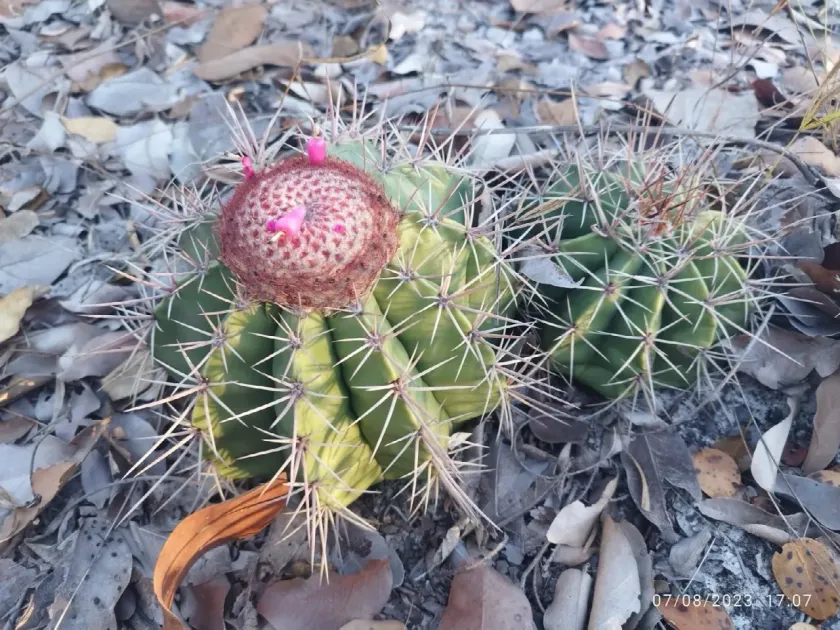
The plant features a globular stem with prominent ribs and sharp spines. The most distinctive feature is the cephalium, a woolly structure that appears at the top of mature plants and serves as the base for small, pink flowers.
Regarding climate requirements, this species demands constant warmth and bright, direct light. Cultivating it outside its natural range requires a controlled environment, such as a greenhouse, where temperatures can be kept stable throughout the year.
The soil should be highly porous, consisting mainly of mineral components like coarse sand, gravel, and pumice. Organic matter should be kept to a minimum to ensure rapid water drainage and prevent moisture-related root issues.
Agriculture of this species is primarily ornamental, suited for private cactus collections. Proper handling involves infrequent but thorough watering during the growing season, allowing the soil to dry out completely between applications.
Main diseases and pests
The most significant threat to Melocactus bahiensis is root rot, triggered by stagnant water and inadequate soil aeration. Once the root system is compromised, the plant is difficult to recover, making prevention essential.
Pests such as mealybugs often hide within the dense bristles of the cephalium. Their presence can be devastating as they weaken the cactus and promote the growth of sooty mold on the plant surface.
Spider mites are another common challenge in arid greenhouse conditions. These tiny pests feed on the epidermis, leaving visible scarring and potentially exposing the plant to secondary bacterial infections.
To prevent these issues, growers should maintain a consistent monitoring program, checking the cephalium and stem base regularly for signs of infestation or fungal activity. Good ventilation is the best defense against pathogens.
Treatment involves the judicious use of systemic insecticides and acaricides. However, one must be cautious, as some chemical compounds can be phytotoxic to sensitive succulent tissues if applied in incorrect concentrations.