
Melocactus conoideus
Melocactus conoideus
Description
Sowing dates
Sowing of Melocactus conoideus seeds is typically performed in spring when the soil temperature remains consistently between +25°C and +28°C.
The substrate for sowing must be sterile and mineral-based, typically a blend of fine sand and perlite to allow for optimal drainage.
Seeds are scattered on the surface and should not be covered with a thick layer of soil, as they require light to germinate effectively.
Maintaining high relative humidity within the seedling tray is essential during the first weeks of the life cycle.
Seedlings develop slowly, requiring a stable environment until they reach a size sufficient for transplanting into individual pots.
Growing requirements
Melocactus conoideus is a species within the Cactaceae family, natively found in restricted regions of the Bahia state in Brazil.
This species demands bright, filtered sunlight and is highly sensitive to the cold, requiring a warm climate throughout the year.
The ideal soil is porous and rocky, which allows for rapid water drainage and prevents the accumulation of excess moisture.
During the growing season, the plant benefits from warm temperatures, while winter care requires protection from frost and cold drafts.
Proper airflow is necessary to mimic the natural rocky habitats where this species thrives in its native environment.
Main diseases and pests
Root rot caused by overwatering is the most critical threat to the long-term health and survival of this cactus species.
Spider mites represent a major pest risk, especially when the ambient air in the growing facility is dry and lacks proper ventilation.
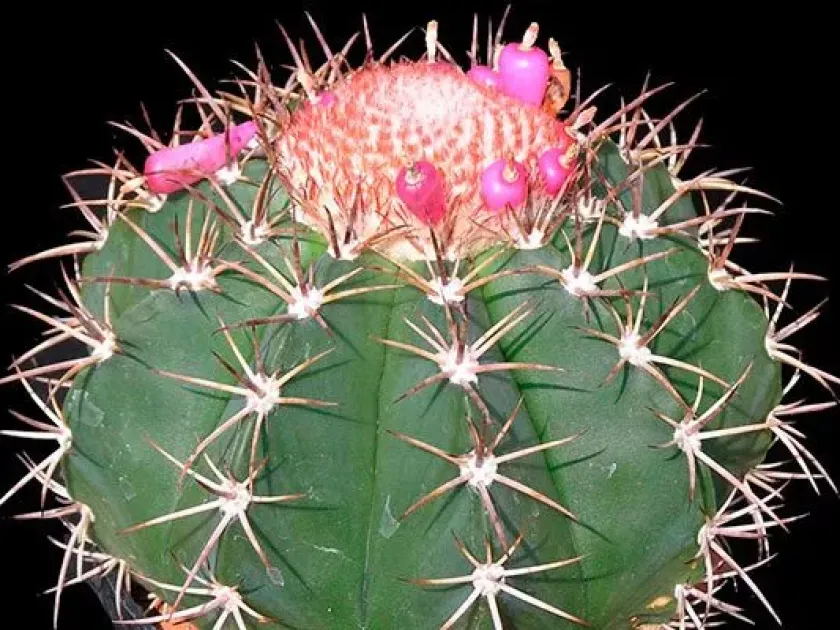
Mealybugs can often hide within the cephalium, the specialized structure on top, making detection and manual removal difficult.
Fungal infections can quickly spread if the moisture levels in the pot remain high for too long without sufficient drainage.
Integrated pest management, including regular visual inspections and the use of appropriate pesticides, is recommended for healthy growth.
Harvesting
The primary horticultural use of Melocactus conoideus is for specialized botanical collections and the conservation of rare cacti.
Seeds are harvested manually from the mature red fruits that emerge periodically from the woolly cephalium at the crown of the cactus.
The fruits must be processed immediately after harvesting to extract the seeds and prevent mold growth on the fruit skin.
Cleaning the seeds involves rinsing them thoroughly and allowing them to air dry on paper before long-term storage or immediate sowing.
Due to its status as a rare species, systematic seed production in controlled conditions is vital for its presence in global horticulture.