
Melocactus salvadorensis
Melocactus salvadorensis
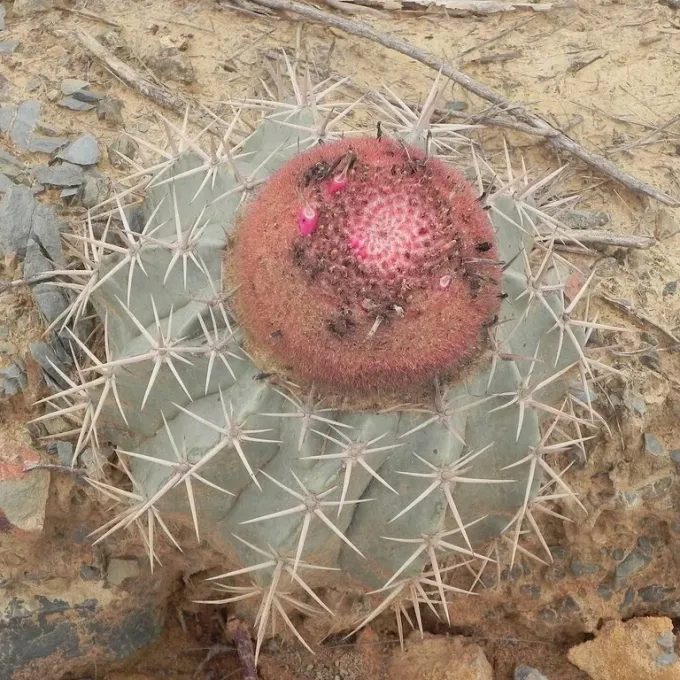
Description
Sowing dates
Propagation of Melocactus salvadorensis for cultivation purposes is primarily achieved through seed germination. The process starts in spring, when the ambient temperature is consistently maintained between 22 and 25 degrees Celsius.
For successful germination, a sterile, well-draining substrate composed of sand, perlite, and fine gravel is essential. Seeds are sown on the surface and covered with a glass lid to maintain high humidity levels.
Air circulation is crucial during the early stages; thus, the containers must be aired daily to prevent the development of mold or fungal pathogens that can destroy young seedlings.
Pricking out the seedlings should only occur when they have developed sufficiently and are robust enough to handle transplanting. This usually takes several months or even a year given their slow growth rate.
Young plants require consistent environmental conditions to establish their root systems. Any deviation in moisture levels during this sensitive period can lead to significant losses in the batch.
Growing requirements
Melocactus salvadorensis is a member of the Cactaceae family and is native to the arid rocky regions of Brazil. This species is highly valued for its distinct cephalium, a specialized structure on the stem apex.
The culture requires a highly permeable substrate with an acidic or neutral reaction. A mixture of loamy soil, pumice, and coarse sand provides the necessary drainage to prevent root suffocation.
Watering must be very deliberate and moderate. The growing medium should be allowed to dry out completely between irrigation cycles, as the roots are extremely prone to rot in waterlogged conditions.
High light intensity is fundamental for the health and development of this cactus. If sunlight is insufficient, the plant will lose its characteristic compact shape and the cephalium will fail to develop.
Temperature management is critical; the plant thrives in warm climates but requires a dormant period during winter, provided the temperatures remain above 15 degrees Celsius to prevent chilling injuries.
Main diseases and pests
Root rot is the most significant physiological threat to this species, typically caused by overwatering or poor soil drainage. Proactive disease management involves using fungicides during the potting stage.
Mealybugs are the most common pests, often sheltering within the dense bristles of the cephalium. Regular inspections of the upper parts of the plant are necessary to detect early infestations.
Spider mites can also cause damage to the epidermis of the plant, especially in low-humidity environments. These pests leave characteristic lesions that can lead to secondary infections.
Root aphids may attack the underground parts of the cactus, leading to stunted growth and yellowing of the stem. Systemic insecticides are recommended for effective control when symptoms appear.
Maintaining a clean cultivation environment, including the sterilization of tools and pots, is essential to minimize the risk of pest and pathogen spread within the collection.