
Melocactus paucispinus
Melocactus paucispinus
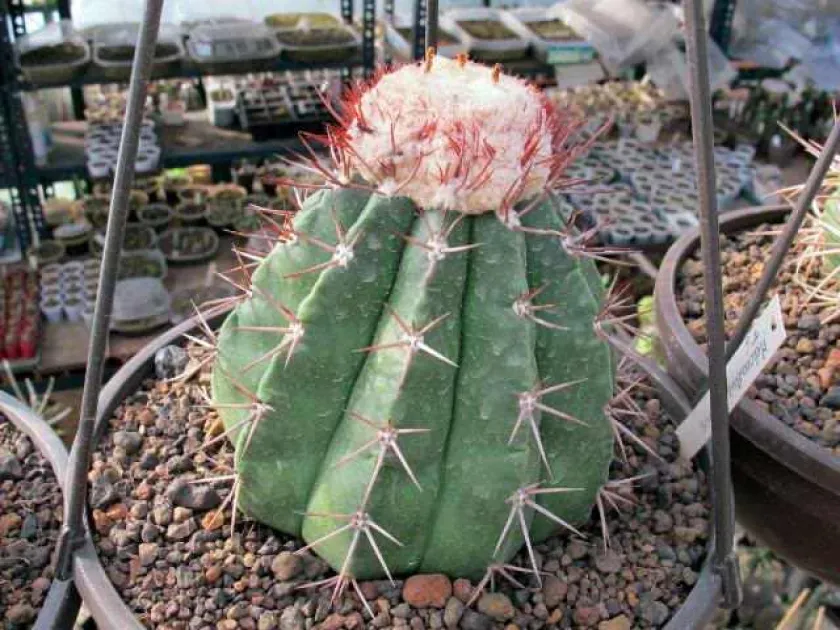
Description
Growing requirements
Melocactus paucispinus is a distinct species within the Cactaceae family, native to the rocky habitats of Bahia, Brazil. This plant is well-adapted to high-temperature environments with distinct dry seasons.
Successful cultivation requires a highly porous substrate. A mixture of gravel, coarse sand, and a small percentage of mineral soil is recommended to mimic its natural environment and ensure optimal root aeration.
Light requirements for this species are intense. It thrives in bright, filtered sunlight, which encourages the development of a healthy cephalium—the specialized structure from which small flowers and red fruits emerge.
Temperature management is critical. As a tropical cactus species, Melocactus paucispinus cannot tolerate frost or prolonged exposure to temperatures below 15 degrees Celsius, which can lead to metabolic stress.
Watering techniques must balance the need for hydration during the growing season with strict water restriction during winter. Overwatering is the most common cause of failure in domestic and greenhouse environments.
Main diseases and pests
Root rot is the primary threat to the health of Melocactus paucispinus. It is typically caused by poorly draining soil or frequent watering during dormant phases, leading to the decay of the root system.
Spider mites are common pests that target this cactus, particularly in dry indoor environments. These pests puncture the epidermis, leading to visible scarring and secondary infections.
Mealybugs are another persistent issue, often lodging themselves in the crevices of the cephalium. Regular manual inspection and the use of systemic insecticides are standard control measures.
Fungal pathogens may infect the stem if high humidity coincides with inadequate ventilation. Proper airflow is essential for the long-term vitality of the cactus in a controlled environment.
In cases of infestation, it is advisable to isolate the plant immediately to prevent the spread to other collections, as the slow growth rate of this species makes recovery from damage difficult.