
Melocactus oreas
Melocactus oreas
Description
Growing requirements
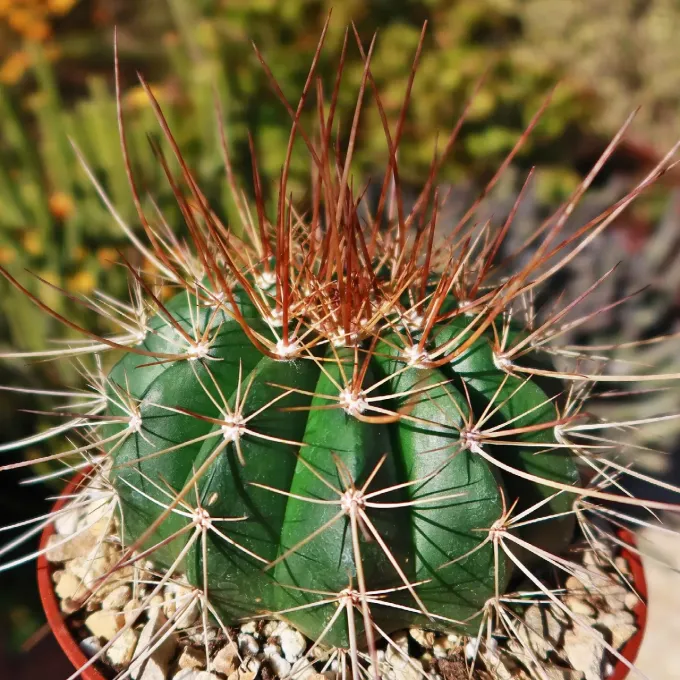
Melocactus oreas is a unique member of the Cactaceae family, primarily native to the rocky and arid regions of Brazil. It is highly valued among collectors for its distinct botanical structure.
The plant features a globular green stem that develops a prominent cephalium at the apex as it matures. This cephalium produces numerous small, pink to reddish flowers and eventually bright, berry-like fruits.
Cultivation requires a highly porous and inorganic potting medium. A mixture of pumice, coarse sand, and a small portion of potting soil ensures the drainage necessary to prevent root rot.
As a tropical cactus, it requires warm temperatures throughout the year. It does not tolerate cold drafts or freezing temperatures, and it thrives best in a greenhouse environment where temperatures remain above 15°C.
Light intensity is critical for the development of the cephalium. While it needs plenty of bright, indirect sunlight, direct midday sun in high-temperature climates should be filtered to prevent scorched tissues.
Main diseases and pests
The most common pests affecting this species are mealybugs and spider mites, which can easily infest the dense, woolly structure of the mature cephalium.
Root rot, caused by fungal pathogens due to excessive moisture or poor soil aeration, remains the primary threat to the plant's long-term health in cultivation.
To mitigate risks, growers must prioritize a strict watering schedule, ensuring that the substrate is completely dry before applying more water, especially during the winter dormancy period.
Regular sanitation of the growing area and the use of systemic insecticides, if necessary, are essential for keeping the plant free from sap-sucking pests.
Any signs of discoloration at the base of the stem should be addressed immediately by repotting the plant into fresh, dry substrate and inspecting the root system for decay.