
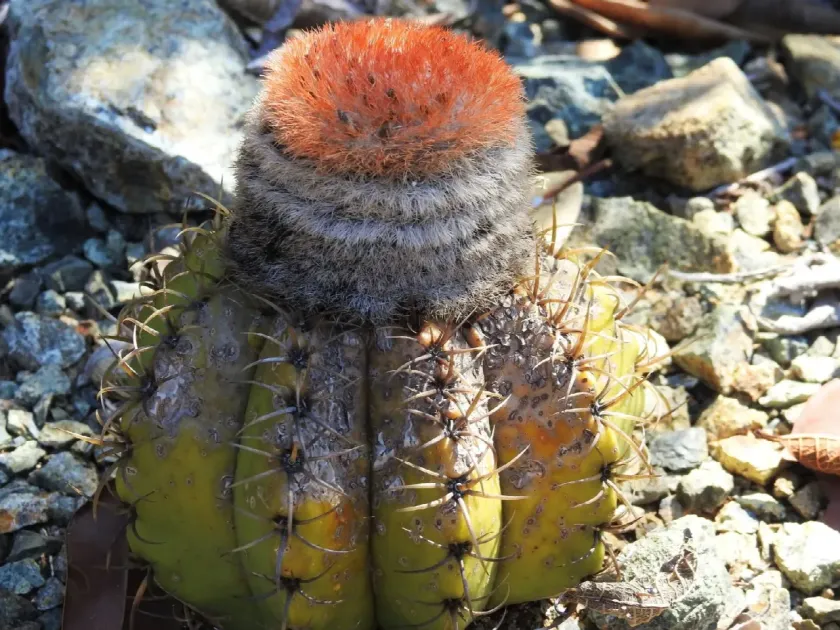
Melocactus matanzanus
Melocactus matanzanus
Description
Growing requirements
Melocactus matanzanus belongs to the Cactaceae family. It is a rare endemic species originating from the Matanzas province in Cuba, typically found in limestone substrates.
The plant requires high levels of bright, indirect sunlight to thrive. Adequate light is essential for the healthy development of the cephalium, which distinguishes mature plants of this genus.
A stable, warm environment is necessary, as this species is sensitive to temperatures below 15 degrees Celsius. Ideally, temperatures should remain between 22 and 30 degrees Celsius during the growing season.
The soil mix must be extremely well-draining, consisting of coarse sand, gravel, and minimal organic matter. Proper aeration of the root system is vital for the longevity of the plant.
Irrigation management is crucial; the plant should only be watered when the substrate is completely dry. Overwatering is the most common cause of failure in cultivating this specific species.
Main diseases and pests
The primary threats to Melocactus matanzanus are root and crown rot, which occur when water accumulates around the base of the plant in cool or poorly ventilated conditions.
Spider mites are common pests that thrive in dry environments; they suck the sap from the epidermis, leaving unsightly scars that never heal on the slow-growing stem.
Mealybugs are another frequent pest, often nesting deep within the cephalium bristles, making them difficult to detect until the infestation becomes severe.
Scale insects can attach themselves to the stem, drawing nutrients and weakening the cactus, which may lead to secondary infections by fungi or bacteria.
Maintenance of high hygiene standards, regular observation of the apical meristem, and the use of preventive pesticide treatments are essential for keeping the plants healthy.