
Melocactus levitestatus
Melocactus levitestatus
Description
Growing requirements
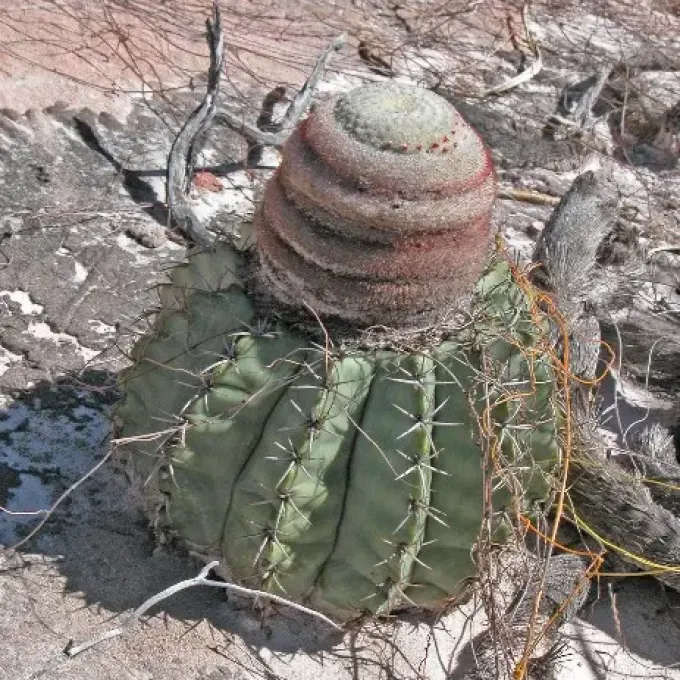
Melocactus levitestatus is a distinctive species belonging to the Cactaceae family. Native to the state of Bahia in Brazil, it thrives in arid, rocky environments and is prized for its impressive cephalium, a cap-like structure on top of the plant that produces flowers and fruits.
This species requires a warm climate with temperatures consistently above 22°C (72°F) for optimal growth. It is highly susceptible to chill injury, and keeping the plant in temperatures below 15°C (59°F) during the winter months is risky.
The soil medium must be highly porous to ensure rapid drainage. A mixture consisting of coarse sand, crushed gravel, and a small portion of organic loam is ideal. Stagnant water around the roots is the primary cause of plant death.
Adequate sunlight is essential for maintaining the health and form of the cactus. It requires several hours of direct morning sunlight, although it may benefit from light shading during the peak afternoon heat in extremely hot climates.
Watering management is a delicate balance. During the active growing season, the plant should be watered only after the substrate has completely dried out. In the dormant period, watering should be minimized or completely suspended to prevent rot.
Main diseases and pests
Root rot is the most common threat, usually caused by improper soil aeration or overwatering during the dormant winter phase.
Mealybugs are frequent pests that hide within the cephalium bristles, making them difficult to detect and eradicate without specialized systemic treatments.
Spider mites can rapidly damage the epidermis of the plant, especially in conditions where the air humidity is extremely low for long periods.
Preventative care includes the use of sterilized, fast-draining substrate and regular monitoring of the stem and crown for signs of discoloration.
In cases of severe infestation, using contact-based insecticides or systemic solutions is recommended to protect the growth points of the cactus.