
Melocactus lanssensianus
Melocactus lanssensianus
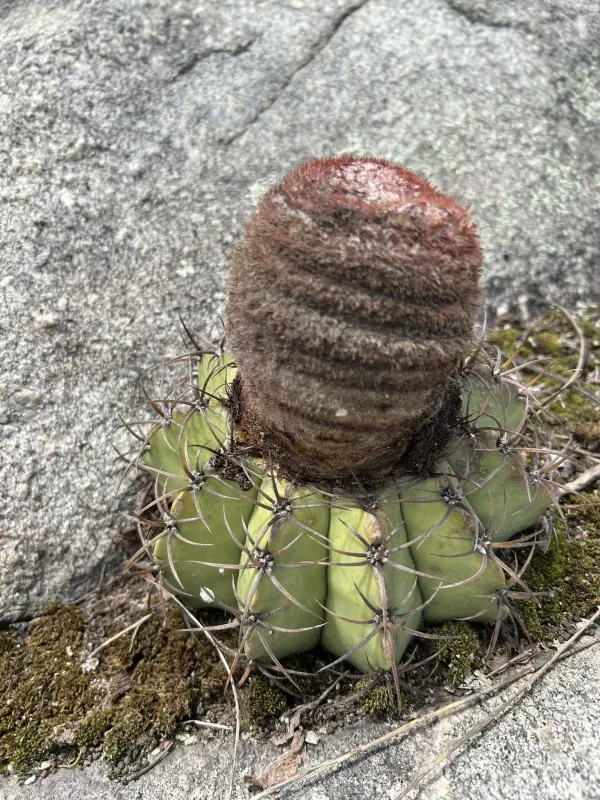
Description
Sowing dates
The propagation of Melocactus lanssensianus is performed via seeds, which should be sown in early spring to leverage increasing daylight hours.
A specialized, highly permeable substrate is required, typically composed of coarse sand, perlite, and a small fraction of organic peat to maintain aeration.
Seeds are placed on the surface of the moist soil and covered with a clear material to ensure high humidity levels during the germination phase.
A constant temperature between 25 and 30 degrees Celsius is essential for optimal germination rates, which usually occur within a few weeks.
Post-germination, the seedlings require gradual acclimatization to lower humidity and increased airflow to prevent damping-off diseases.
Growing requirements
Melocactus lanssensianus belongs to the Cactaceae family and is native to Brazil, requiring warm and stable environmental conditions to flourish.
This species thrives in bright, filtered light and should be protected from harsh, direct midday sunlight to avoid skin damage and tissue burns.
Soil requirements involve a well-draining, slightly acidic mineral mixture that prevents water retention, as the roots are highly susceptible to rot.
During the active growth season, water should be supplied sparingly, allowing the substrate to dry out completely between irrigation cycles.
Winter maintenance requires a frost-free environment with temperatures strictly above 15 degrees Celsius, as the plant cannot survive cold exposure.
Main diseases and pests
Root rot is the most common threat, primarily triggered by overwatering combined with suboptimal drainage or cool room temperatures.
Pests such as mealybugs and spider mites are frequent invaders, targeting the cephalium and the fleshy body of the cactus for nutrients.
Effective pest management involves systemic insecticides and regular inspections of the apical growth area where pests tend to aggregate.
Fungal infections can be minimized by ensuring excellent air circulation around the plants and avoiding water accumulation on the plant body.
Maintaining a clean growing environment and sterilizing equipment are critical steps in preventing the spread of systemic diseases in a collection.