
Melocactus glaucescens
Melocactus glaucescens
Description
Growing requirements
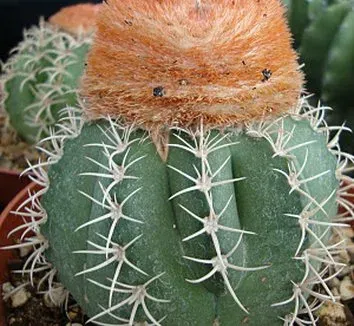
Melocactus glaucescens is a distinctive member of the Cactaceae family, native to the arid rocky habitats of Brazil. It is easily recognized by its globular, glaucous-green stem and the prominent cephalium, a specialized woolly structure from which pink flowers and red fruits emerge.
This species requires high light intensity to maintain its compact shape and vibrant color, but it should be protected from the harsh midday sun to avoid epidermal scorching. Excellent air circulation is mandatory, as this plant thrives in breezy conditions and suffers in stagnant, humid environments.
The substrate must be extremely well-draining, consisting primarily of mineral components such as volcanic gravel, perlite, and coarse sand. Organic matter should be kept to a bare minimum, as the roots are highly susceptible to rot if moisture is trapped in dense peat-based soils.
Temperature management is critical for survival. Melocactus glaucescens is a warmth-loving species; temperatures should remain above 15°C throughout the year. During the active growth season, it performs best in temperatures ranging from 25°C to 32°C, which encourages steady development.
Watering requires precision and timing. During the growing season, water only when the substrate has completely dried out, avoiding any standing water near the base. In winter, keep the plant almost entirely dry, as the root system enters a period of dormancy where it cannot process excess moisture.
Main diseases and pests
The primary threat to this cactus is root and stem rot caused by overwatering or poor drainage. Once decay begins at the base of the plant, it is often difficult to save the specimen, making preventative measures the most important aspect of cultivation.
Spider mites are a common pest, particularly in dry and poorly ventilated conditions. They feed on the sap of the succulent, causing unsightly scarring and weakening the plant's structural integrity, which necessitates immediate treatment with suitable acaricides.
Mealybugs often infiltrate the tight crevices of the cephalium, making them difficult to detect and eradicate. Regular inspection is necessary, and if infestations occur, systemic insecticides or targeted applications of alcohol-based solutions should be used.
Scale insects can also attach themselves to the stem, drawing nutrients and causing localized tissue death. These pests must be removed manually or treated with horticultural oils, taking care not to damage the delicate surface of the cactus skin.
Maintaining a healthy environment with consistent airflow and the correct mineral balance in the soil is the best defense against disease. Stressed plants are significantly more prone to infections, so environmental stability is the foundation of successful Melocactus management.