
Melocactus ernestii
Melocactus ernestii
Description
Sowing dates
Sowing seeds of Melocactus ernestii is best done in late spring, when ambient temperatures remain consistently above 22-25 degrees Celsius. Germination requires high humidity and a sterile substrate based on sand and peat.
Seeds should be sown on the surface of the moist soil without deep burial, as they require light to activate growth processes. Maintaining a greenhouse effect by covering the container with glass or plastic film is crucial until the first sprouts appear.
Pricking out young seedlings should not be done until at least a year after sowing, when the plants have strengthened and developed their primary root system. Transplantation into individual pots must be handled carefully to avoid damaging fragile roots.
Melocacti grow quite slowly, so do not expect rapid growth in the first years of life. Regular repotting into fresh soil mix every two years promotes better development of the plant's aerial part.
An important step is the gradual adaptation of young plants to direct sunlight. A sudden change in environmental conditions can cause severe sunburn on the delicate skin of young specimens.
Growing requirements
Melocactus ernestii belongs to the Cactaceae family and naturally grows in the rocky soils of Brazil. This plant requires a large amount of bright sunlight throughout the day to maintain its ornamental qualities.
The optimal temperature regime for the crop is 20-30 degrees in summer and no lower than 15 degrees in winter. Excessive cooling and high soil moisture in winter can quickly lead to the death of the root system.
The soil must be as permeable to water and air as possible, with the addition of mineral components such as broken brick, perlite, or coarse sand. Stagnant moisture in the pot is strictly unacceptable for this species.
Watering should be regular but moderate: the substrate surface must dry out between waterings. In winter, watering is reduced to a minimum, limited to occasional moistening to prevent loss of turgor.
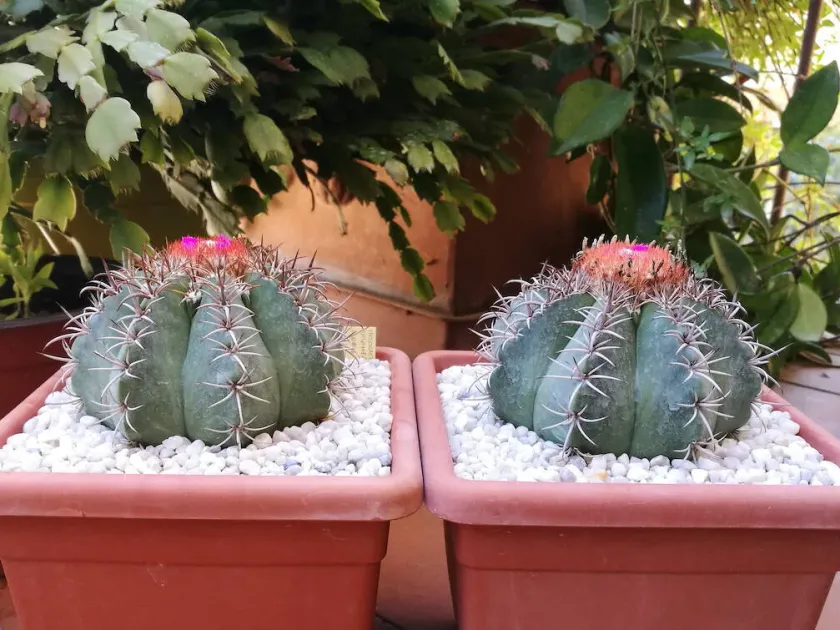
For the proper development of the cephalium—a characteristic woolly cap on top—the plant requires a stable microclimate without sudden changes in humidity. Fertilization is carried out with specialized low-nitrogen cactus fertilizers.
Main diseases and pests
The main problems with cultivation are related to improper watering regimes, which provoke stem rot. Fungal infections spread quickly when moisture stagnates in the substrate and ventilation is poor.
Among pests, the mealybug is the most dangerous, hiding in the crevices between the ribs and at the base of the cephalium. Detecting it at an early stage is extremely difficult due to the specific growth form of the cactus.
Spider mites can attack Melocactus ernestii in conditions of overly dry and stagnant air. Damage from mites appears as dry, light spots that eventually become rough and mar the plant's appearance.
Root mealybugs pose a threat to the hidden part of the plant, often leading to sudden death without visible signs of disease on the aerial part. Prevention involves using high-quality, sterilized soil.
To control pests, systemic insecticides are used; however, it is important to monitor the dosage to avoid chemical burns on the cactus tissue. Regular inspection of the plant allows for timely detection of any infestation.
Harvesting
The economic use of Melocactus ernestii is strictly limited to ornamental floriculture and collecting rare succulent species. Harvesting on an industrial scale is not practiced for this specific cactus.
Collectors gather seeds after the natural ripening of the berries, which appear on the top of the cephalium. Ripe berries usually have a bright color and easily detach from the cactus body when touched.
Seed collection is carried out by washing the berry pulp through a fine sieve, followed by thorough drying of the planting material. Seeds can be stored in dry paper envelopes in a dark place until the next sowing season.
Vegetative propagation by cuttings is virtually impossible for this species due to its biological characteristics, so the seed method remains the primary one. Quality seeds retain viability if stored correctly for 1-2 years.
Plants ready for sale are evaluated by the development of the cephalium and the general condition of the epidermis. A healthy plant should have a uniform color, a firm body, and no visible damage on the ribs.