
Medinilla speciosa
Medinilla speciosa
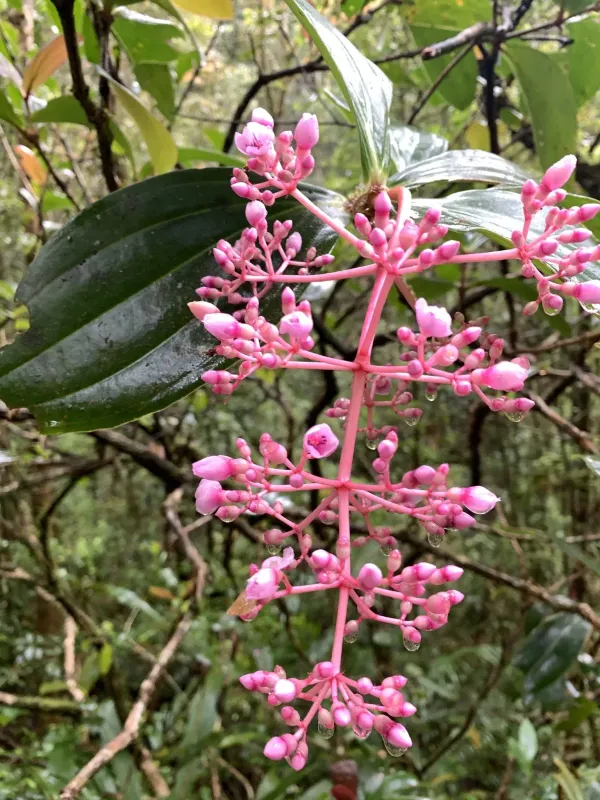
Description
Growing requirements
Medinilla speciosa is a magnificent evergreen shrub belonging to the Melastomataceae family. Originally from the tropical forests of Southeast Asia, specifically Java and the Philippines, it is well-known for its cascading pink inflorescences.
This species requires specific climate conditions to thrive. The ideal temperature range is between +20 °C and +25 °C during the growing season. It is sensitive to cold, and temperatures should never drop below +16 °C to avoid plant stress.
Humidity is a critical factor for successful cultivation. Medinilla thrives in high humidity environments, ideally around 70-80%. Regular misting with soft water or the use of humidifiers is essential, especially in indoor settings.
The potting medium must be airy, well-draining, and slightly acidic. A mix of orchid bark, peat moss, and perlite is recommended to mimic its natural epiphytic habitat, preventing the roots from becoming waterlogged.
Bright, indirect light is necessary for healthy growth. Intense direct sunlight can cause leaf scorch, while too little light will inhibit flowering. A location near an east-facing window is usually the best choice for this plant.
Main diseases and pests
The most common threat to Medinilla speciosa is root rot caused by overwatering. It is crucial to allow the top layer of the substrate to dry out slightly between waterings to ensure proper oxygenation of the root system.
Pests like spider mites frequently attack the plant in dry conditions. These small pests suck sap from the leaves, causing stippling and yellowing. Regular inspections and maintaining high humidity are the best preventative measures.
Mealybugs are another common nuisance, often found hidden in the crevices of the foliage and stems. They can be manually removed or treated with insecticidal soaps or systemic treatments if the infestation is severe.
Fungal infections, often manifested as leaf spots, can develop if there is insufficient air circulation or if water remains on the leaves for too long. Improving ventilation is key to preventing these types of issues.
To keep the plant healthy, periodic pruning of damaged or dead foliage is recommended. This practice not only improves the aesthetics of the plant but also reduces the risk of pathogens spreading to healthy tissues.