
Medinilla cumingii
Medinilla cumingii
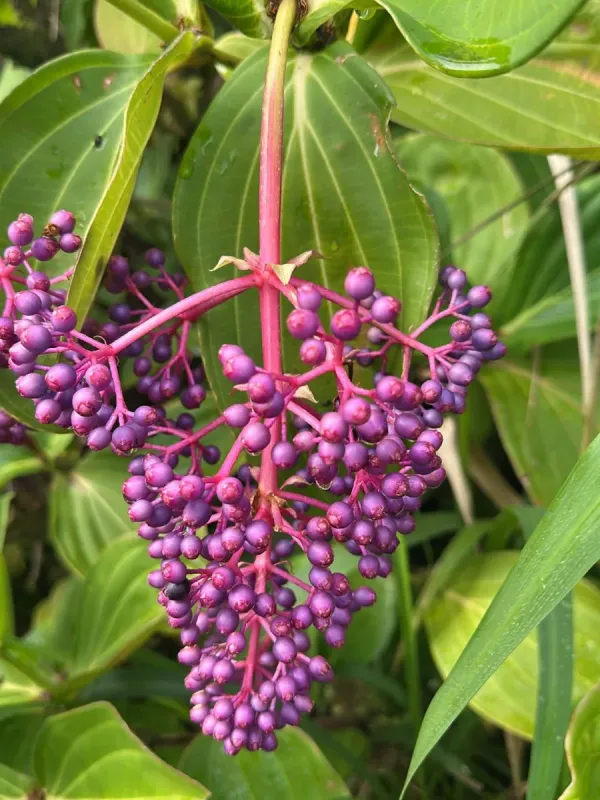
Description
Growing requirements
Medinilla cumingii is a distinguished member of the Melastomataceae family. Native to the tropical rainforests of the Philippines, this plant typically exhibits epiphytic growth habits in its natural habitat.
The plant thrives in high humidity conditions, ideally between 70% and 80%. Consistent moisture levels are vital, especially during the active growing season to prevent leaf tip browning.
Bright, indirect light is essential for the healthy development of Medinilla cumingii. Direct sunlight exposure should be avoided to prevent thermal damage to the foliage.
Temperature requirements are fairly strict, needing a warm environment between +20°C and +25°C. Exposure to cold drafts or temperatures below +16°C must be strictly avoided.
The substrate must be exceptionally well-draining, mimicking the epiphytic forest floor. A mixture of orchid bark, peat moss, and perlite provides the necessary aeration and moisture balance.
Main diseases and pests
Root rot is the most common physiological disorder caused by overwatering or poorly aerated soil conditions. Ensuring proper drainage is the primary defense strategy.
Spider mites are frequent pests, especially when indoor air becomes dry. They colonize the underside of leaves and can cause significant foliage discoloration if left untreated.
Mealybugs are another potential threat, often found in leaf axils. Physical removal combined with systemic insecticides is usually necessary to manage severe infestations.
Fungal leaf spot diseases may appear if the foliage stays wet for too long without adequate air circulation. Keeping the environment ventilated is a key cultural control method.
Regular monitoring of the plant’s health, specifically during seasonal transitions, allows for early intervention and ensures long-term vigor of the crop.