
Medinilla assamica
Medinilla assamica
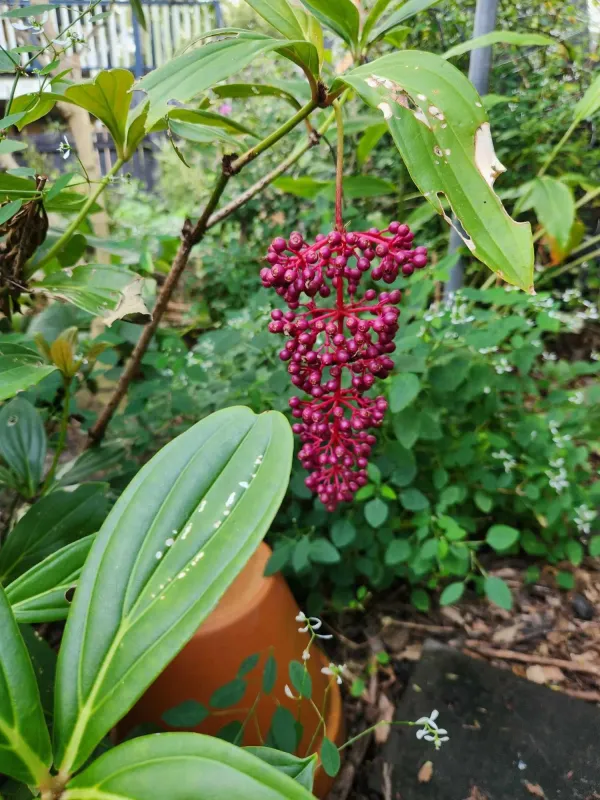
Description
Growing requirements
Medinilla assamica is a captivating evergreen shrub from the Melastomataceae family, native to the tropical forests of India and parts of Southeast Asia. It is often found growing as an epiphyte, utilizing its specialized root system to anchor onto forest trees.
The plant features lush, opposite leaves with prominent longitudinal veins and produces pendulous, bright inflorescences. These pink-to-purple flowers are the primary reason for its popularity as an ornamental specimen in tropical glasshouses.
Growth requirements include a warm, humid environment where temperatures remain stable, ideally between 20°C and 25°C. Exposure to cold drafts or rapid temperature drops can cause significant physiological stress and leaf drop.
Cultivation necessitates a porous, well-draining potting medium, such as a mix of orchid bark, peat moss, and perlite. The objective is to mimic the natural epiphytic substrate that allows for both aeration and moisture retention.
Consistent high humidity is essential for this species. Misting the foliage with distilled water or using ultrasonic humidifiers helps maintain the local environment, preventing the leaf tips from drying out.
Main diseases and pests
Root rot is the most significant threat to Medinilla assamica, typically caused by overwatering or poor drainage. Once the roots are compromised, the plant struggles to recover, making prevention through controlled watering paramount.
Spider mites are notorious pests that flourish in dry conditions. They congregate on the undersides of leaves, causing yellowing and webbing. Maintaining high ambient humidity is the most effective biological deterrent.
Scale insects and mealybugs can infest the stem junctions and leaf axils. If detected early, these can be controlled with neem oil or specific insecticidal soaps, avoiding harsh chemical treatments where possible.
Fungal leaf spot diseases are common when ventilation is inadequate. Ensuring that the air circulates freely around the plant prevents the buildup of stagnant, moisture-laden air that supports fungal growth.
Regular sanitation, such as removing fallen debris from the pot surface and pruning dead stems, significantly reduces the risk of pest and disease outbreaks within the collection.