
Medinilla mirabilis
Medinilla mirabilis
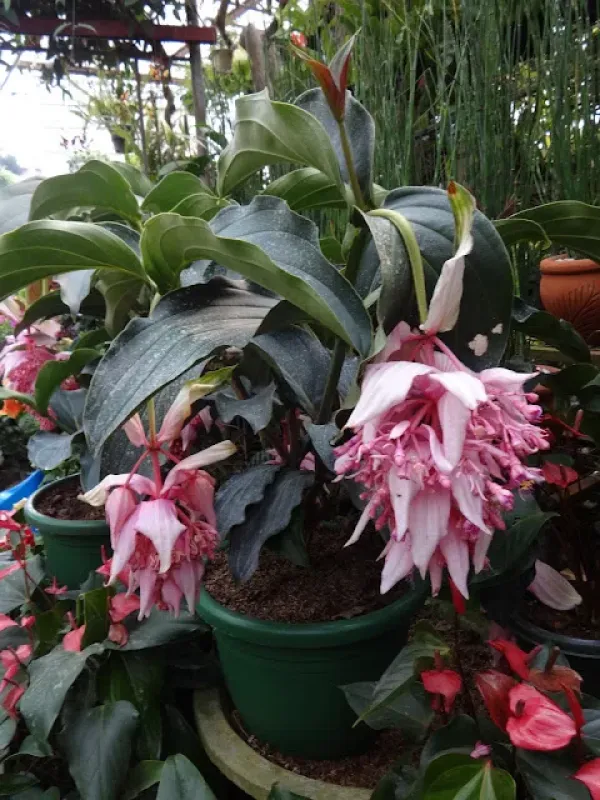
Description
Growing requirements
Medinilla mirabilis is a distinguished member of the Melastomataceae family. This plant originates from the tropical regions of Southeast Asia, where it typically develops as an epiphyte, anchoring itself to the bark of trees within humid rainforest environments.
The cultivation of this species requires strict environmental control. It thrives best in temperatures between 20°C and 25°C. Protecting the plant from sudden thermal shocks and cold drafts is essential for maintaining healthy growth and development throughout the year.
A high ambient humidity level of 70–80% is mandatory. In drier climates, supplemental misting or the use of humidification systems is necessary to prevent the leaves from losing turgor and to ensure the proper formation of flower clusters.
The substrate must be highly porous and acidic, with a pH ranging from 5.5 to 6.5. A mix containing bark, peat, and perlite provides the necessary drainage required by the root system, preventing the accumulation of excess water that can lead to root rot.
Light management involves providing bright, filtered illumination. While the plant requires significant energy for its large flowers, it cannot tolerate direct afternoon sun, which often causes necrotic spotting on the foliage.
Main diseases and pests
Mealybugs and scale insects represent the most common pests affecting Medinilla mirabilis. These insects thrive in warm, sheltered environments and can rapidly weaken the plant by feeding on the sap of young stems and developing buds.
Root system health is frequently threatened by phytophthora or pythium-induced rot, typically occurring due to waterlogged substrate conditions. Careful monitoring of soil moisture levels is critical to avoid anaerobic conditions that promote fungal pathogens.
Spider mites are a persistent threat, particularly in environments with inadequate air humidity. They cause stippling on the leaves and eventually lead to foliage drop if the infestation is not addressed with appropriate acaricides.
Maintaining proper airflow is the primary defense against fungal diseases such as powdery mildew. Stagnant air allows spores to germinate on leaf surfaces, necessitating the use of systemic fungicides if the initial infection is observed.
Integrated pest management protocols should be followed strictly. Since the plant is sensitive to chemical burns, it is recommended to test any treatment on a small portion of the foliage before applying it to the entire plant.