
Medinilla hybrid
Medinilla hybrids
Description
Growing requirements
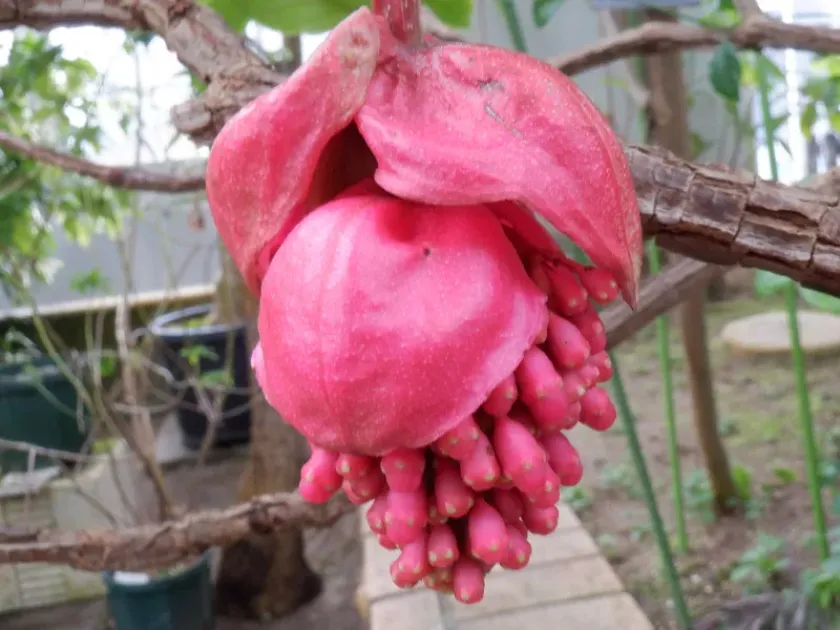
Medinilla hybrid is a sophisticated ornamental plant belonging to the Melastomataceae family. Originally derived from species native to the tropical rainforests of the Philippines and Southeast Asia, it is highly valued for its massive drooping clusters of pink flowers and large, ornamental foliage.
As an epiphyte in its natural habitat, the plant requires a highly porous and aerated growing medium. A mixture based on pine bark, coarse peat, and perlite is ideal to ensure proper root aeration, which is essential to prevent physiological stress and root death.
The climate requirements include high ambient humidity, ideally above 70%. In commercial greenhouse settings, automated misting systems are often used. If kept indoors, it is necessary to provide supplemental humidity to prevent leaf tip browning and flower bud abortion.
Temperature management is crucial for bloom induction. Keeping the plants at slightly cooler temperatures (around 16-18°C) during the winter dormant season encourages the development of the iconic pendulous inflorescences once the temperature rises again in the spring.
Lighting should be bright but filtered. Medinilla is prone to leaf scorch if exposed to direct intense sunlight, yet insufficient light levels will result in weak, spindly growth and a complete lack of flowering, making light positioning a critical success factor.
Main diseases and pests
Pest management focuses primarily on controlling mealybugs, scale insects, and spider mites. These pests thrive in indoor conditions, particularly where air circulation is poor, making regular inspection of leaf undersides a fundamental part of the agricultural routine.
Fungal diseases such as Botrytis or various root rots are frequent complications. To prevent these, it is essential to ensure that the growing medium does not stay waterlogged for extended periods and that the foliage remains relatively dry during evening hours.