
Medinilla maculata
Medinilla maculata
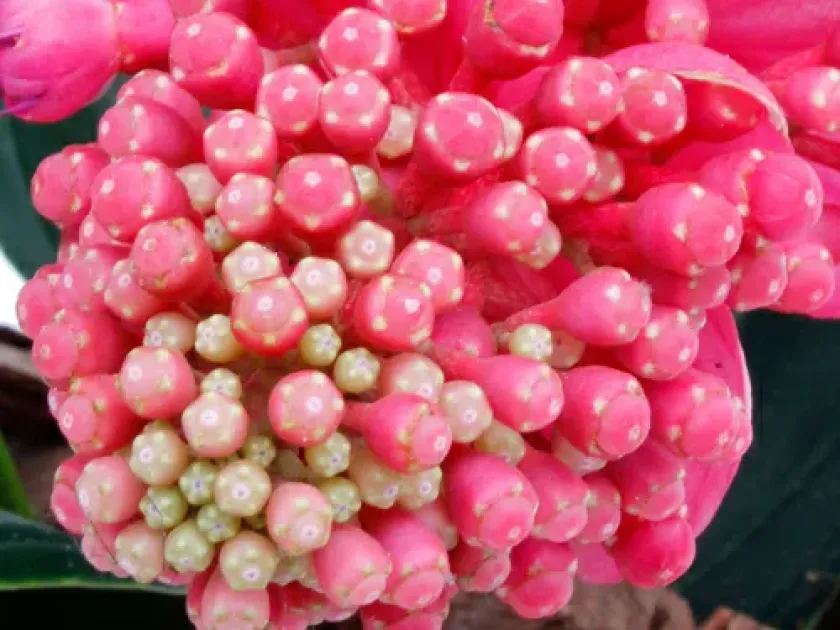
Description
Growing requirements
Medinilla maculata is an exotic plant belonging to the Melastomataceae family, originating from the humid rainforests of Southeast Asia. This species is highly valued for its striking appearance and specialized growth habits.
To successfully cultivate this species, growers must maintain a tropical environment with temperatures consistently between 20°C and 26°C. The plant is sensitive to thermal stress and must be kept away from cold drafts and direct heating sources.
Lighting requirements are specific; the plant thrives in bright, filtered light. High-intensity direct sun often leads to leaf necrosis and physiological stress, necessitating the use of shade cloth in professional greenhouse settings.
The soil substrate must be highly porous and moisture-retentive but well-draining. A mix consisting of orchid bark, high-quality peat, and perlite is often utilized to mimic the plant's natural epiphytic growing conditions.
Proper irrigation management is the cornerstone of Medinilla agronomy. The substrate should remain consistently moist, but it must never be waterlogged, as the root system requires significant oxygen levels to prevent rot.
Main diseases and pests
Root rot is the most significant pathological threat to Medinilla maculata, typically caused by fungi such as Phytophthora or Pythium, which thrive in poorly aerated or waterlogged growth media.
Mealybugs and scale insects represent the most persistent pest challenges. These sap-sucking insects often hide in the leaf axils or along the stems, causing stunted growth and providing entry points for secondary infections.
Spider mites are common in environments with inadequate humidity levels. These pests cause yellowing and spotting of leaves, which can lead to significant aesthetic damage if not treated with systemic or contact acaricides.
Nutrient deficiencies, particularly iron-induced chlorosis, are common when the pH of the growing medium rises too high or when using hard irrigation water. Maintaining a slightly acidic pH is essential for nutrient uptake.
To maintain plant health, strict phytosanitary measures, including regular equipment disinfection and early detection of infestations, are recommended to prevent the rapid spread of pests across the production area.