
Medinilla himalaiana
Medinilla himalaiana
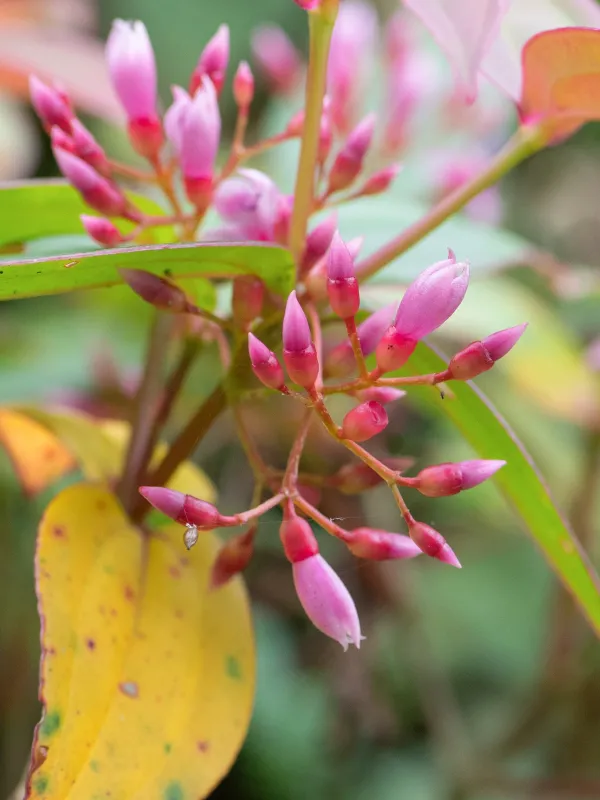
Description
Growing requirements
Medinilla himalaiana belongs to the Melastomataceae family. It is a stunning evergreen shrub native to the humid mountain forests of the Himalayas, where it often grows as an epiphyte, attaching itself to trees and rocks.
In cultivation, this plant requires a highly controlled microclimate. A consistent ambient temperature between 20°C and 25°C is ideal, as the plant is sensitive to thermal fluctuations and cold drafts, which can cause significant foliage drop.
The substrate must be exceptionally well-draining, mimicking an epiphytic environment. A mix containing coarse bark, sphagnum moss, perlite, and a small amount of charcoal is highly effective in maintaining aeration around the root zone.
Bright, indirect light is essential for the healthy growth of this species. Direct sunlight should be avoided as it can scorch the large, fleshy leaves, while insufficient light levels can prevent the plant from blooming or cause weak growth.
Watering requires precision; the plant should be kept moist but never waterlogged. Using lukewarm, filtered, or distilled water is recommended, as the plant is sensitive to the minerals and chlorine often found in tap water.
Main diseases and pests
The most frequent pests affecting Medinilla himalaiana are spider mites and scale insects. These pests thrive in dry indoor air, making it vital to monitor the foliage and maintain high humidity levels throughout the year.
Fungal issues such as root rot can occur if the substrate remains constantly saturated or if drainage is inadequate. Ensuring that the pot has sufficient holes and using an airy, loose substrate is the primary defense against these pathogens.
Chlorosis and leaf spot diseases may appear if the soil pH or nutritional balance is incorrect. Regular, light fertilization with an orchid-grade fertilizer during the active growing season helps prevent nutrient deficiencies.
Stunted growth is often a symptom of root crowding or old, decomposed potting media. Repotting every two to three years into fresh, airy medium is necessary to rejuvenate the plant and support new growth.
Mechanical damage during routine handling can open entry points for opportunistic bacteria. It is important to handle the stems with care and use sterilized pruning tools to maintain the plant's structural health.