
Medinilla scortechinii
Medinilla scortechinii
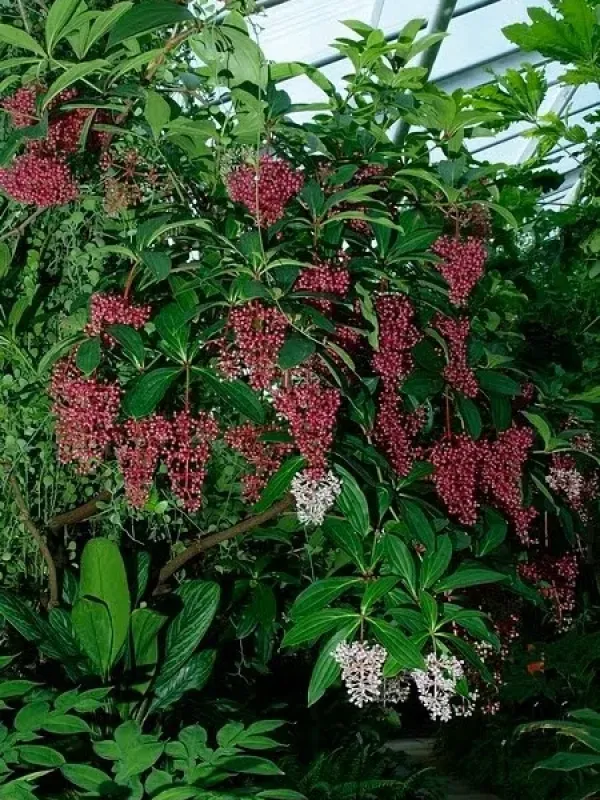
Description
Growing requirements
Medinilla scortechinii is an exquisite ornamental plant belonging to the Melastomataceae family, native to the tropical rainforests of Malaysia. In its natural habitat, it functions as an epiphyte, typically found perched on the branches of canopy trees where it thrives on high humidity and filtered sunlight.
For successful cultivation, mimicking the tropical environment is essential. The plant requires a consistent temperature range between 20°C and 25°C and must be protected from cold drafts and sudden thermal fluctuations, which can trigger immediate leaf drop.
The potting medium must provide exceptional drainage and aeration. A substrate consisting of a mixture of sphagnum moss, orchid bark, perlite, and a small amount of peat is ideal to allow the epiphytic root system to breathe while retaining necessary moisture.
Light requirements are specific: Medinilla scortechinii prefers bright, indirect light. Prolonged exposure to direct sun will scorch the leaves, while insufficient light leads to stunted growth and a failure to produce its characteristic floral displays.
Watering should be performed carefully, ensuring the substrate is moist but never waterlogged. Using rainwater or distilled water is highly recommended, as the plant is sensitive to the mineral salts and chlorine often found in tap water supplies.
Main diseases and pests
Scale insects are a common pest for this species, often clustering on the stems and the undersides of leaves. Early detection is crucial, and pests should be removed manually or treated with horticultural oils specific to ornamental epiphytes.
Mealybugs are another frequent threat, typically found in the nodes and crevices of the plant. If left untreated, they can sap the plant's vitality and lead to secondary infections, requiring the use of systemic insecticides.
Root rot is the most significant threat caused by improper watering techniques. If the growing medium remains soggy, the roots lose their ability to take up oxygen and rapidly decay, necessitating immediate repotting into fresh, dry substrate.
Spider mites can become problematic during the winter months when indoor humidity levels drop significantly. Regular misting and maintaining proper ambient humidity are the best preventative measures against these microscopic arachnids.
Fungal leaf spot diseases may appear if the plant is kept in an environment with poor air circulation. Improving airflow and removing infected leaf tissue helps to curb the spread of the pathogen throughout the plant collection.