
Medinilla rubicunda
Medinilla rubicunda
Description
Growing requirements
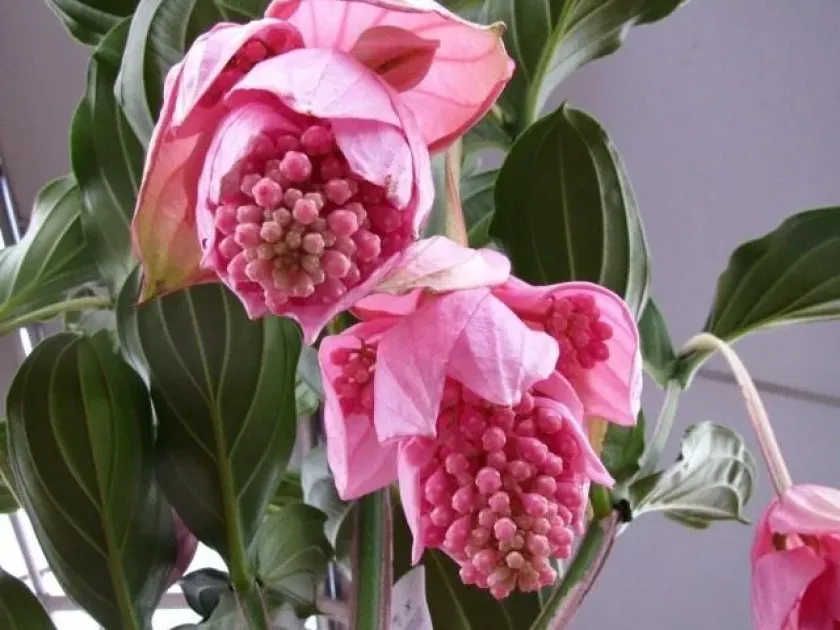
Medinilla rubicunda is a distinctive shrub belonging to the Melastomataceae family. Native to the tropical regions of Southeast Asia, this plant often exhibits epiphytic growth habits, climbing on trees in its natural habitat.
Successful cultivation requires a high-humidity environment, ideally maintained above 70%. In indoor conditions, it is essential to provide consistent moisture to the surrounding air to mimic the plant's native rainforest climate.
The species thrives in bright, filtered light. It is crucial to avoid direct, harsh sunlight, which can quickly scorch the large, fleshy leaves, leading to irreversible damage and loss of plant vigor during the growing season.
The substrate must be well-draining and airy. A mixture of orchid bark, peat moss, and perlite is often recommended to ensure that oxygen reaches the roots while preventing waterlogging, which the plant cannot tolerate.
Optimal growth occurs at temperatures between 20°C and 25°C. During the winter season, a cooling period with temperatures around 16°C is beneficial, as it stimulates the development of floral buds for the upcoming spring cycle.
Main diseases and pests
The primary pests affecting this plant include spider mites and scale insects. These pests thrive in dry environments, making consistent humidity control the first line of defense for a healthy plant.
Root rot is the most common physiological disorder caused by overwatering or poor drainage. Once the root system is compromised by fungal pathogens due to stagnant water, it is difficult to restore the health of the shrub.
Bacterial spots may appear if the leaves are consistently wet or if there is insufficient air circulation. Proper spacing between plants and good ventilation are key strategies to prevent the spread of foliar diseases.
Mealybugs can often be found in the leaf axils, where they feed on plant sap. Regular inspection of the foliage is necessary to detect early signs of infestation and to initiate immediate manual or chemical control.
Nutrient imbalances, particularly iron deficiency, can lead to chlorosis. Using a balanced, water-soluble fertilizer specifically formulated for acid-loving tropical plants will help maintain deep green foliage and overall plant health.