
Matucana intertexta
Matucana intertexta
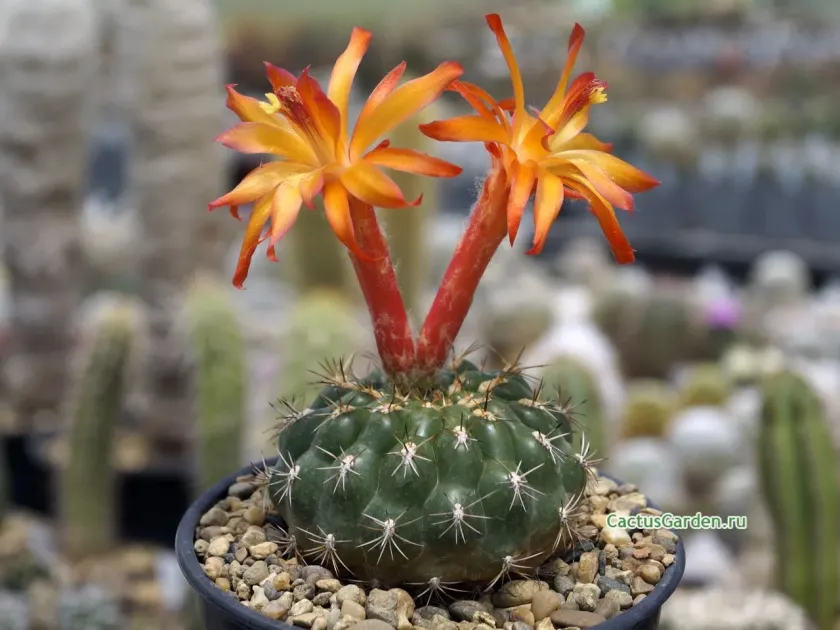
Description
Growing requirements
Matucana intertexta is a species of succulent plant belonging to the Cactaceae family. Native to the Andean highlands of Peru, it is highly valued by collectors for its attractive spherical shape and dense, interlacing spines.
This species requires high levels of ambient light to maintain its compact growth form. While it thrives in bright conditions, it is sensitive to intense summer sun, which can cause severe dehydration and skin scarring.
The substrate must be highly mineral-based, consisting of coarse sand, pumice, and gravel. It is crucial to ensure that the pot has large drainage holes to prevent the accumulation of moisture, which is lethal to the roots.
During the growing season, watering should be performed cautiously, allowing the soil to dry out completely between applications. In the winter rest period, the plant should remain almost completely dry to prepare for blooming.
Optimal growth is achieved when the plant is kept in well-ventilated conditions. Air circulation helps regulate temperature and prevents the buildup of humidity that could lead to fungal issues.
Main diseases and pests
The primary threat to Matucana intertexta is root rot, typically caused by improper watering techniques or heavy, organic-rich soil that holds water for too long. Signs include a softening of the stem base.
Mealybugs represent a significant pest challenge. These insects congregate around the spines and the growing point, feeding on the plant's sap and causing growth deformities if left untreated.
Red spider mites often attack the plant if the surrounding environment is too dry and hot for prolonged periods. They produce fine webbing and leave tiny puncture marks, eventually causing the plant to lose its vibrant appearance.
Cultural control is essential: keeping the area around the cactus clean and checking new plants for signs of infestation before placing them in the collection is the best preventative strategy.
Chemical control should be applied using targeted systemic insecticides. Following label instructions carefully is vital to prevent damaging the sensitive epidermis of the cactus during the application process.