
Massonia tenella
Massonia tenella
Description
Growing requirements
Massonia tenella is a fascinating species within the Asparagaceae family, native to the arid landscapes of South Africa. This bulbous plant is characterized by its distinct, succulent appearance and a growth cycle strictly tied to the seasonal precipitation patterns of its habitat.
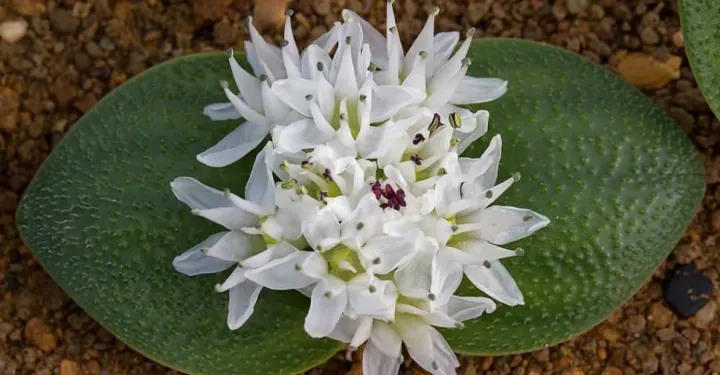
Botanically, it consists of two fleshy, prostrate leaves that lie flat against the substrate, often showing textured surfaces. Its inflorescence is a sessile, dense cluster of flowers that sits between the leaves, displaying prominent stamens that contribute to its exotic appeal.
Cultivation requires a highly porous, inorganic substrate mixture to prevent waterlogging. A blend of grit, pumice, and minimal organic soil is recommended to replicate its natural environment, ensuring that the root system remains aerated and healthy.
Environmental conditions must be carefully managed to mimic seasonal changes. A cool, bright winter period is essential for active growth, while a completely dry and warm summer dormancy phase is required to prevent bulb rot and ensure the plant's long-term survival.
In terms of horticulture, this species is highly valued by specialized collectors and botanical institutions. Its use is focused on niche ornamental display and genetic preservation, rather than large-scale agricultural production, due to its specialized ecological needs.
Main diseases and pests
The primary threats include fungal infections, particularly Botrytis and various root rots triggered by poor drainage or overwatering. These pathogens spread quickly during the winter growth phase, often leading to rapid tissue death in the bulb.
Mealybugs are frequent pests that hide in the junction between the leaves and the bulb neck, drawing nutrients and causing physical damage. Regular inspection is necessary to catch infestations before they compromise the structural integrity of the plant.
Spider mites can become an issue in low-humidity environments, leading to leaf discoloration and dehydration. Maintaining proper air movement and avoiding overly arid indoor conditions can help mitigate the risk of mite colonization.
Fungal gnats may inhabit the top layers of the soil if it remains damp for too long. Their larvae can damage the root system, indirectly creating entry points for secondary bacterial or fungal infections that prove fatal to the bulb.
Proper sanitation, including the use of clean, sterile potting media and careful monitoring of moisture levels, remains the most effective strategy against these biological threats, as treating systemic infections in succulents is often difficult.