
Massonia hirsuta
Massonia hirsuta
Description
Growing requirements
Massonia hirsuta is a fascinating member of the Asparagaceae family, native to the arid regions of South Africa. As a winter-growing succulent bulb, it has evolved to thrive in specialized environmental niches where moisture is seasonal.
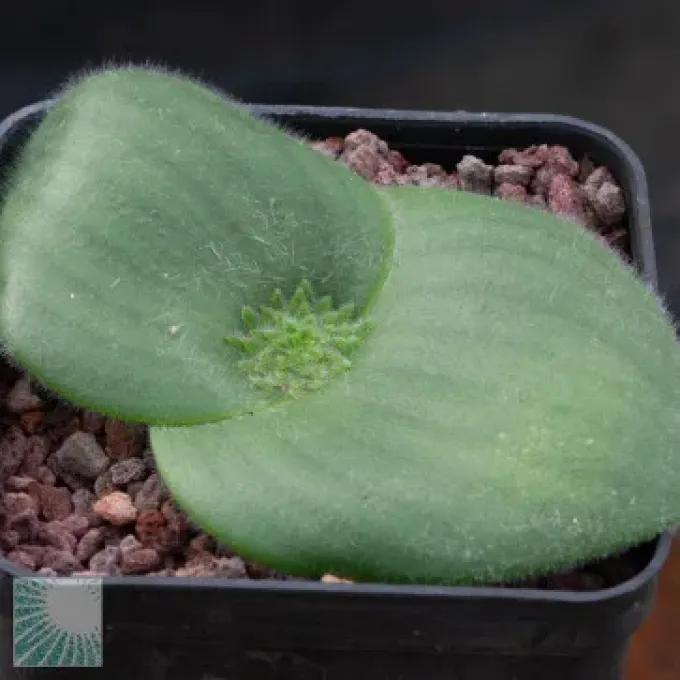
The plant features two distinct, pustulate, and hairy leaves that lie flat against the soil surface. This structure allows the plant to trap moisture and protect the bulb from the harsh rays of the African sun during dormant periods.
Cultivation requires bright, indirect light during its growth phase. Direct sunlight is beneficial in winter to prevent stretching, but care must be taken to provide adequate ventilation to avoid overheating the plant tissues.
The soil must be extremely well-draining, mimicking the stony or sandy soils of its natural habitat. A mixture of pumice, perlite, and a small amount of gritty loam is recommended to ensure rapid drainage and air circulation around the bulb.
Watering should be carefully managed, following the plant's natural cycle. During the growing season (winter), keep the substrate slightly moist. Once the leaves begin to yellow in spring, decrease watering until the plant enters complete dormancy in summer.
Main diseases and pests
The most common threat is bulb rot, usually triggered by overwatering or poor drainage. Once the bulb tissues become waterlogged, pathogens quickly colonize the plant, making recovery extremely difficult or impossible.
Mealybugs are the primary pest concern for this species. They tend to hide in the tight crevice between the two leaves, where they are protected from topical treatments, requiring systemic insecticides for effective control.
Root mites can also infest the bulb base, causing stunted growth and leaf discoloration. Regular inspection of the root zone during repotting is essential for early detection of these microscopic pests.
High humidity and poor air circulation contribute to the development of gray mold (Botrytis). Ensuring a constant flow of fresh air around the plants is the most effective preventive measure against fungal outbreaks.
To maintain plant health, avoid reusing soil from previous seasons. Using fresh, sterile components for the potting mix significantly reduces the risk of introducing soil-borne diseases to the sensitive root system.