
Massonia amoena
Massonia amoena
Description
Growing requirements
Massonia amoena is a distinct species of bulbous perennial plant belonging to the Asparagaceae family. Native to the winter rainfall regions of South Africa, it has evolved to grow during cooler months and enter a deep dormancy during the hot, dry summers.
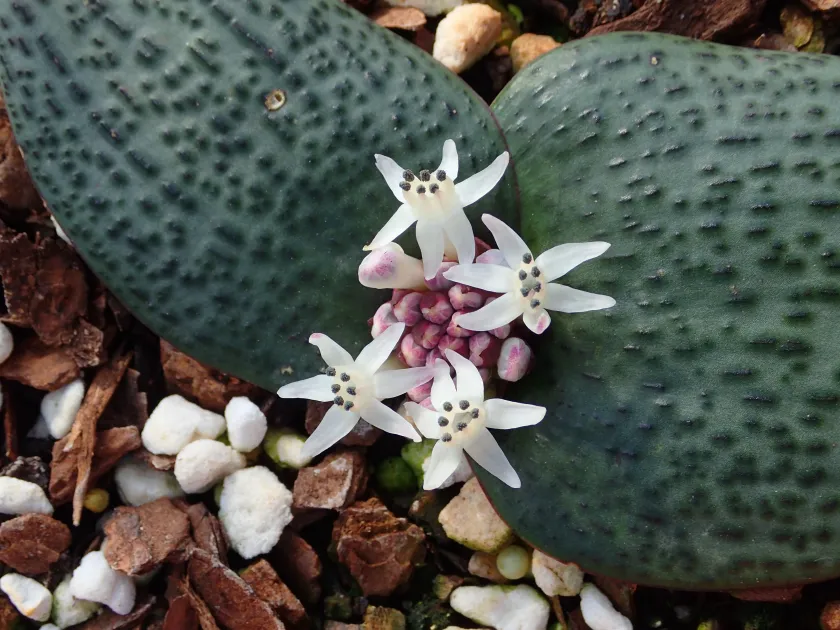
The plant is known for its peculiar morphology, typically producing two flat, spreading leaves that lie close to the soil surface. These leaves often feature small bumps or papillae on their upper surface. The inflorescence emerges from the center, appearing as a dense, brush-like head of flowers.
To successfully cultivate this species, growers must mimic its native environment by providing a cool growing season. Temperatures between 10°C and 18°C are ideal for healthy development. Overheating during the growth phase will stress the plant and often cause premature dormancy.
The potting medium must be highly porous and well-draining. A mix consisting primarily of coarse sand, perlite, and a small portion of organic loam is recommended. The container should also have sufficient drainage holes to prevent any accumulation of excess moisture.
Bright, indirect light is essential for maintaining the plant's compact form. While it thrives in bright conditions, it should be protected from harsh, direct sunlight, which can easily scorch the leaf surface and damage the bulb tissues hidden just below or at the soil level.
Main diseases and pests
The most significant threat to Massonia amoena is root rot caused by overwatering or poor drainage. Since the plant is adapted to arid conditions, the bulbs are extremely susceptible to fungal pathogens if the soil remains damp for extended periods during the dormancy phase.
Common horticultural pests such as mealybugs and spider mites can infest the foliage, particularly in poorly ventilated environments. Routine monitoring and the application of appropriate mild insecticides are recommended to maintain the plant's health throughout the active growing cycle.