
Massonia echinata
Massonia echinata
Description
Growing requirements
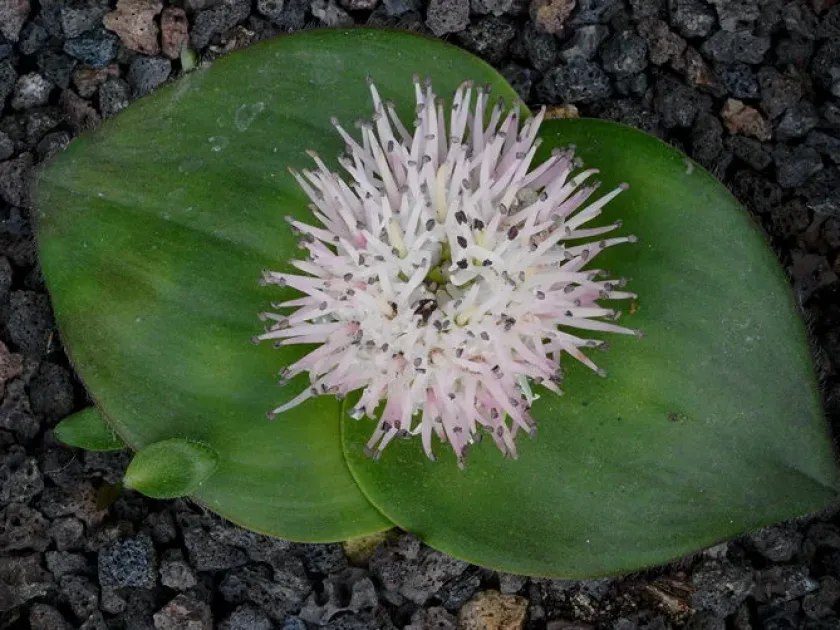
Massonia echinata is a fascinating species of the Asparagaceae family, native to the arid rocky regions of South Africa. It is characterized by its pair of prostrate leaves that lie flat against the ground, often featuring unique textural surface protuberances.
Cultivation of this species requires mimicking its native environment, which includes well-drained, gritty, and mineral-rich soils. It thrives under bright, filtered sunlight and requires sufficient space to allow its horizontal leaves to develop properly without obstruction.
The climate requirements are specific: Massonia echinata follows a Mediterranean cycle, meaning it grows during the cooler months and enters a dormant period during the heat of summer. Providing a cool, dry environment during the resting phase is essential for its survival.
Watering must be managed with extreme caution. During the growing season, moisture should only be provided when the substrate is completely dry to the touch. During dormancy, water must be withheld entirely to prevent the bulb from rotting.
Propagation is typically performed through seeds sown in autumn. The seedlings require a steady supply of light and careful monitoring of moisture levels to ensure the successful formation of the small bulbs that sustain the plant through its lifespan.
Main diseases and pests
The primary threat to the health of Massonia echinata is poor drainage or excessive soil moisture, which inevitably leads to lethal fungal rot of the bulb and roots. Constant airflow around the plant is vital to prevent stagnant moisture accumulation.
Pests such as spider mites and mealybugs present a significant risk, particularly when the plant is kept in conditions of low air circulation. These pests can cause severe damage to the leaf surfaces and weaken the overall structure of the bulb.
Regular visual inspections are recommended to detect the presence of pests at an early stage. If infestation occurs, gentle systemic treatments should be applied, ensuring that the concentration is safe for delicate succulent tissues.
Fungal infections can appear as discolored spots on the leaves or a breakdown of the plant tissue. To mitigate this risk, maintaining a clean environment and utilizing sterilized tools for maintenance is standard practice.
Proper sanitation of the growing environment, including the removal of old, necrotic leaves, helps to reduce the likelihood of pathogen development and keeps the plant vibrant during its active growth phase.