
Massonia dregei
Massonia dregei
Description
Growing requirements
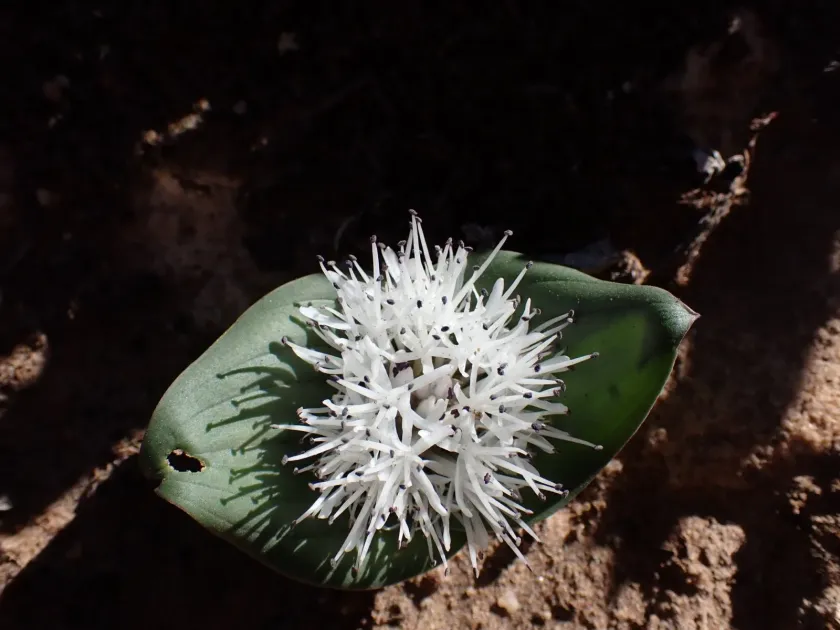
Massonia dregei is a rare bulbous species belonging to the Asparagaceae family, native to the arid landscapes of South Africa. This plant is highly specialized, having evolved to endure extreme desert conditions by maintaining a very low profile close to the ground, which minimizes water loss and heat stress.
The plant is anatomically distinct, featuring two large, prostrate leaves that lie flat against the soil surface. Between these leaves, a dense, capitate inflorescence emerges, consisting of numerous small flowers with prominent filaments. These flowers are specifically structured to attract nocturnal pollinators in their harsh natural environment.
Cultivation requires a deep understanding of the plant's dormant cycle. As a winter-growing species, Massonia dregei needs cooler temperatures and moderate hydration during its active phase, typically coinciding with the cooler months. Proper ventilation is essential to ensure the leaves remain healthy and free from bacterial infections.
Regarding soil requirements, the substrate must be highly inorganic, mimicking the rocky or sandy soils of its native habitat. A mix of coarse pumice, perlite, and a small amount of grit is recommended to ensure that water drains away from the bulb instantly, preventing rot and fungal growth in the root zone.
While Massonia dregei is not considered an agricultural crop for food or fiber, it holds significant value in the botanical and nursery trade as a specialty ornamental plant. Its slow growth rate and unique aesthetic make it a prized specimen for collectors of arid-adapted flora who prioritize specialized horticultural practices.
Main diseases and pests
The primary threats to this species are environmental management failures, particularly over-watering during the summer dormancy period. When the plant is kept moist during its natural resting phase, the bulb becomes highly susceptible to rapid decay caused by various soil-borne pathogens and moisture-loving fungi.
Insect pests including mealybugs and spider mites are frequent nuisances that can colonize the plant during the growing season. Because of the plant's delicate leaf structure, mechanical removal or very mild, targeted applications of systemic pesticides are preferred over heavy chemical treatments to avoid damaging the specialized tissue.