
Massonia bifolia
Massonia bifolia
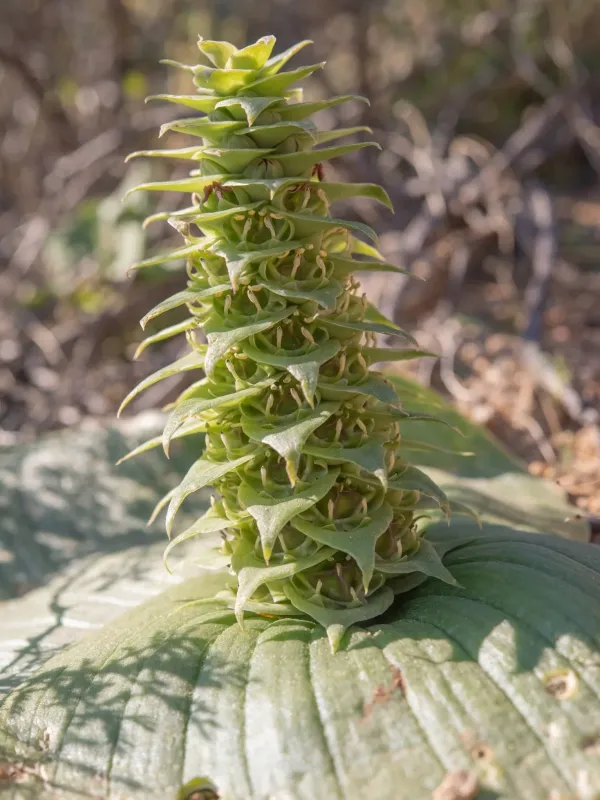
Description
Growing requirements
Massonia bifolia is a botanical species belonging to the family Asparagaceae. Native to the arid regions of Southern Africa, this plant has evolved specific survival strategies, including a dormant period during the hot summer months to avoid water stress.
The plant is defined by its two prostrate leaves that lie flat against the ground. These leaves are typically fleshy and often possess a rugose surface texture, which is a characteristic feature of many geophytes adapted to desert or semi-desert environments.
Cultural requirements involve providing high-intensity light during the cooler growing season. However, protection from intense mid-day sun is essential to prevent leaf scorching, which can be detrimental to the plant’s limited photosynthetic capacity.
The substrate must be extremely well-draining, consisting of a mix of coarse grit, pumice, and minimal organic matter. Soil moisture should be managed strictly, allowing the medium to dry out completely between irrigation sessions to preserve the bulb.
Proper cultivation technique requires replicating the natural cooling cycles. During the winter, providing adequate ventilation is crucial to mimic the natural breezes of its habitat, which helps in preventing excess humidity build-up around the bulb crown.
Main diseases and pests
The primary threats to Massonia bifolia are fungal pathogens associated with moist conditions. Root rot is the most common cause of mortality in greenhouse conditions, usually triggered by poor drainage or overwatering during the dormant period.
Mealybugs are known pests that frequently target the leaf axils of this species. These insects can be difficult to manage due to their hiding spots; therefore, periodic monitoring of the plant’s core is necessary to prevent severe infestations.
Spider mites represent a significant risk, particularly in environments with low relative humidity. Their feeding leads to stippling on the leaves, which significantly reduces the plant’s energy storage capacity, making the bulb smaller for the next season.
Bacterial soft rot can occur if moisture remains trapped in the central cavity of the leaves. This is often exacerbated by poor air circulation and high temperatures, which favor the proliferation of anaerobic bacteria near the bulb base.
Integrated pest management should focus on preventive measures, such as maintaining cleanliness in the cultivation area and ensuring that new plants are inspected before introduction. Chemical treatments should be used cautiously, as bulbs can be sensitive to concentrated pesticides.