
Massonia gypsicola
Massonia gypsicola
Description
Growing requirements
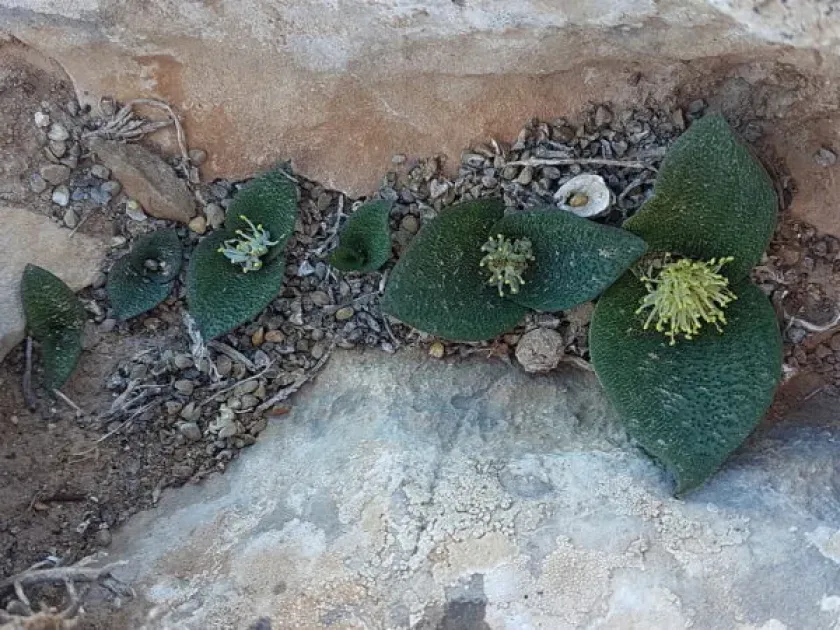
Massonia gypsicola is a rare and highly specialized bulbous plant belonging to the Asparagaceae family. It is characterized by a pair of broad, succulent leaves that lie flat against the ground, a trait that helps the plant survive in its harsh, arid habitat.
The species originates from the semi-desert regions of South Africa, where it has evolved to thrive in specific gypsum-rich soils. This unique geological association dictates its specialized needs in cultivation, making it a prized specimen for collectors of rare succulent flora.
Botanically, it functions as a winter-growing geophyte. During the cooler months, the plant produces a dense inflorescence at the center of its two leaves. The flowers are small, often white to creamy, and emerge just above the soil level to facilitate pollination in the desert environment.
Cultivation requires a highly porous, mineral-based substrate to prevent root rot. It is essential to replicate the natural stony environment by incorporating limestone chips or gypsum-based materials into the potting mix to maintain the necessary drainage and pH levels for healthy development.
The plant demands a distinct dormant period during the hot summer months, during which watering should be almost entirely suspended. During the growing season, moderate but very careful watering is required, always ensuring the soil dries out completely between irrigation sessions.
Main diseases and pests
The primary threat to the longevity of Massonia gypsicola is overwatering, which quickly leads to fungal rotting of the bulb and root system. Maintaining a balance between sufficient moisture and proper aeration is the most critical aspect of the plant's husbandry.
Insect pests such as mealybugs and spider mites can infest the leaves and the crown of the bulb. Regular observation and the use of appropriate systemic insecticides or horticultural oils, applied with care to avoid foliage damage, are recommended for maintaining a pest-free collection.