
Massonia saniensis
Massonia saniensis
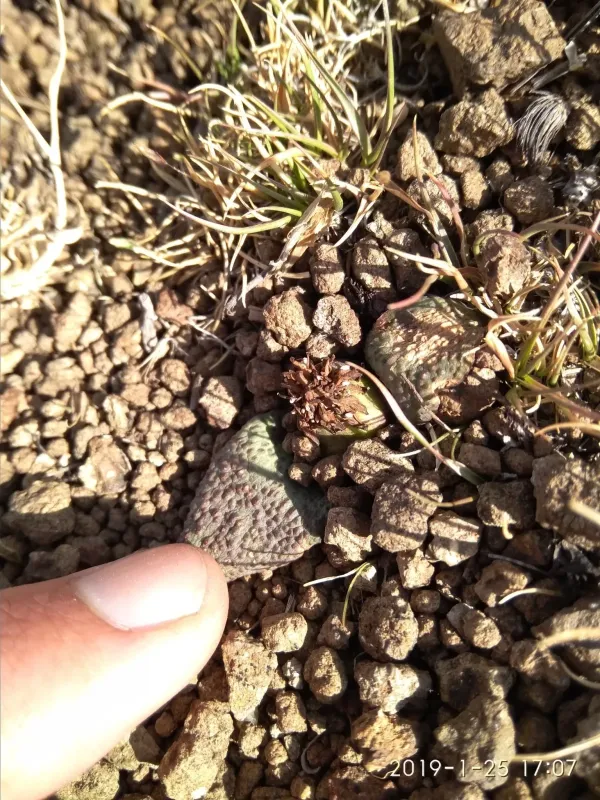
Description
Growing requirements
Massonia saniensis is a rare, high-altitude bulbous plant belonging to the Asparagaceae family. It is an endemic species native to the Sani Pass area in the Drakensberg mountains, South Africa, thriving in harsh, rocky, alpine environments.
Botanically, it is defined by its two prostrate, fleshy leaves that lie flat against the soil surface. This adaptation protects the plant from freezing winds. The inflorescence emerges from the center of the leaves, consisting of dense, brush-like flowers that lack traditional petals but feature prominent, white filaments.
To successfully cultivate this species, growers must provide a highly porous, mineral-based soil medium. A mixture consisting largely of pumice, grit, and sand is essential to prevent moisture accumulation around the basal plate of the bulb, which is highly susceptible to rot.
The cultivation rhythm is strictly seasonal. Plants require a completely dry, dormant period during the warmer months. During the growing season (autumn and winter), they prefer cool temperatures (typically 5–15°C) and bright, indirect light, mimicking their native high-altitude habitat.
Propagation is primarily achieved through seeds. Germination typically occurs in autumn when temperatures drop and moisture becomes available. Due to its slow growth rate, patience is required to develop mature, blooming specimens from seedlings.
Main diseases and pests
The primary threat to Massonia saniensis is root rot induced by improper irrigation management. If the growing medium remains damp while the plant is dormant during the summer, the bulb will quickly succumb to bacterial or fungal decay.
In indoor cultivation settings, mealybugs and spider mites can become significant issues if the ventilation is poor. Regular inspection of the space between the two leaf blades is necessary to ensure these pests do not colonize the plant undetected.
Fungal infections such as Fusarium wilt can arise if the cultivation medium is not properly sterilized. Given the sensitivity of the plant, using a sterile substrate is a non-negotiable aspect of good horticultural practice for this species.
Improper lighting conditions, particularly low light levels, will cause the characteristic flat leaves to elongate and lose their compact form. This structural deviation is a sign of stress and reduces the overall vigor of the bulb for the subsequent flowering season.
Temperature spikes, especially if they occur during the dormant stage, can trigger premature metabolic activity. This exhausts the bulb's stored energy reserves and may lead to a stunted growth cycle in the following year, eventually resulting in the loss of the specimen.