
Mammillaria wiesingeri
Mammillaria wiesingeri
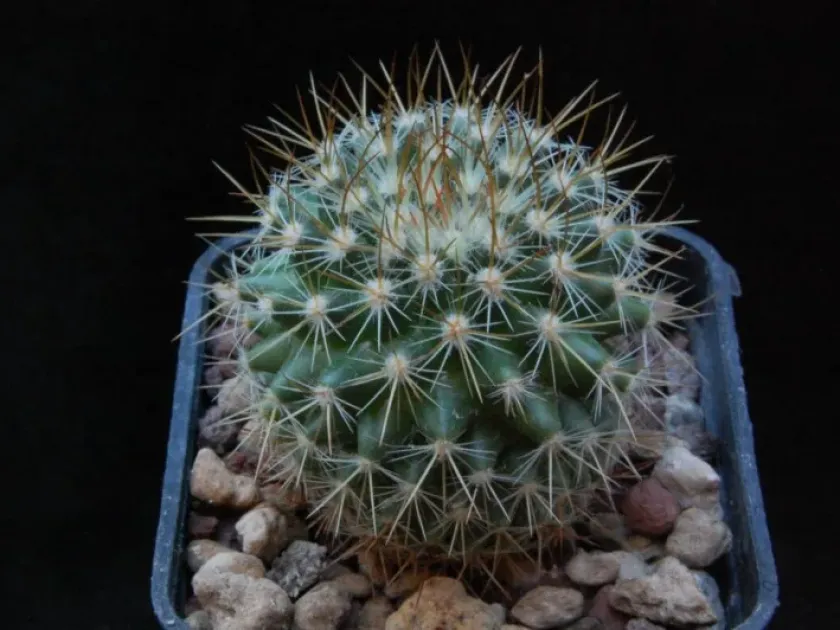
Description
Sowing dates
Propagation of this species is typically achieved through seeds or by separating offset clusters that grow around the base of the plant.
Seeds are sown in a porous, grit-based compost during the early spring to take advantage of the warming temperatures.
High humidity and moderate temperatures are required during the germination phase to ensure a high success rate for the seedlings.
Vegetative propagation involves removing offsets with a sterile tool, followed by a period of drying to callous the wounded tissue.
Once the callous has formed, the offsets are placed on top of dry substrate until roots begin to emerge and establish in the soil.
Growing requirements
Mammillaria wiesingeri is a member of the Cactaceae family, native to the mountainous regions of Mexico where it grows in rocky crevices.
The botanical structure consists of globular to cylindrical stems covered in tubercles, which produce flowers in distinct rings.
Agricultural success requires an inorganic soil mix, predominantly composed of coarse sand and volcanic rock, to ensure efficient drainage.
The plant necessitates bright, direct sunlight for most of the day to maintain its compact form and vibrant spine coloration.
During the winter months, the plant enters a dormant stage where water must be strictly limited to prevent premature growth or decay.
Main diseases and pests
Excessive moisture is the primary threat to the health of the plant, as it rapidly causes root rot and compromise of the root system.
Mealybugs are the most common pest, often colonizing the areas between the tubercles where they are protected from topical treatments.
Spider mites may become an issue if the environment is too dry and lacking proper air circulation, leading to unsightly scarring.
Integrated pest management strategies should include regular inspection and the use of targeted systemic pesticides if infestations occur.
Preventive maintenance involves maintaining excellent air movement around the plant to ensure that moisture does not accumulate on the stem surface.