
Mammillaria albicoma
Mammillaria albicoma
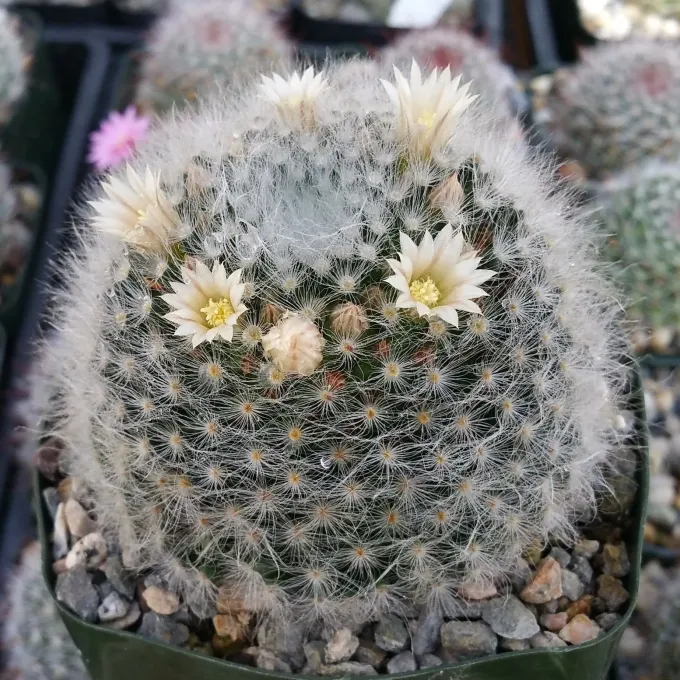
Description
Sowing dates
Propagation of this culture for decorative purposes is most often carried out by seeds in the spring. The optimal time for sowing is March or April, when the daylight hours begin to increase significantly, which has a positive effect on seed germination.
Seeds are sown in a sterile, slightly acidic substrate consisting of a mixture of sand, perlite, and turf soil. It is important to ensure a stable germination temperature within 22–25 degrees Celsius to obtain uniform seedlings.
The containers with seeds are covered with glass or transparent film to create the necessary microclimate with high air humidity. The seedlings must be aired daily to prevent mold and fungal infections from appearing on the soil surface.
After the first real spines appear, the seedlings are gradually accustomed to the open air by removing the cover for increasing periods. Pricking out (transplanting) young plants is carried out several months after they have become sufficiently strong.
Vegetative propagation by side shoots (offsets) is also possible, but the seed method allows obtaining more typical and healthy specimens. The offsets are carefully separated from the mother plant, the cut is dried for several days, and then planted in a light substrate.
Growing requirements
Mammillaria albicoma is a member of the Cactaceae family, originating from the high-mountain regions of Mexico, which determines its basic requirements for growing conditions. The plant prefers bright sunlight, as a lack of it causes the stem to stretch and lose its decorative appearance.
The soil for this culture must be as water- and air-permeable as possible, with minimal organic content. An ideal choice is a ready-made cactus mix with the mandatory addition of coarse-grained sand or gravel chips to ensure drainage.
During the active growing season, watering should be moderate: the soil should dry out almost completely between waterings. In the winter dormant period, the cactus requires almost dry conditions at low temperatures around 10–12 degrees Celsius.
The plant tolerates temperature fluctuations well, characteristic of its natural origin, but it is extremely sensitive to moisture stagnation in the root system. Overwatering is the main mistake in the cultivation of this species.
The culture does not require frequent repotting; it is sufficient to update the pot once every two to three years as the root system grows. Shallow but wide containers with large drainage holes should be chosen.
Main diseases and pests
The main threat to the health of this cactus is various types of rot that occur when the watering regime is violated. Excessive moisture combined with low temperatures leads to damage to the root collar and rapid tissue death.
Among pests, the mealybug poses the greatest danger, often hiding in the dense pubescence of the stem, which makes it difficult to detect at early stages. Systemic insecticides or wiping with alcohol solutions are used to combat it.
Spider mites can damage the plant's epidermis in excessively dry indoor air, leaving characteristic spots and webs. Regular ventilation and maintaining cleanliness significantly reduce the risk of pest infestation.
The root mealybug is a hidden enemy that attacks the roots underground. Signs of infestation include growth arrest and changes in the color of the cactus epidermis, requiring immediate treatment of the substrate with special preparations.
- Fusarium wilt (occurs with an excess of nitrogen and moisture)
- Mealybug (white residue in the spine axils)
- Spider mite (yellowing of the stem)
- Root rot (softening of the stem base)