
Mammillaria baumii
Mammillaria baumii
Description
Growing requirements
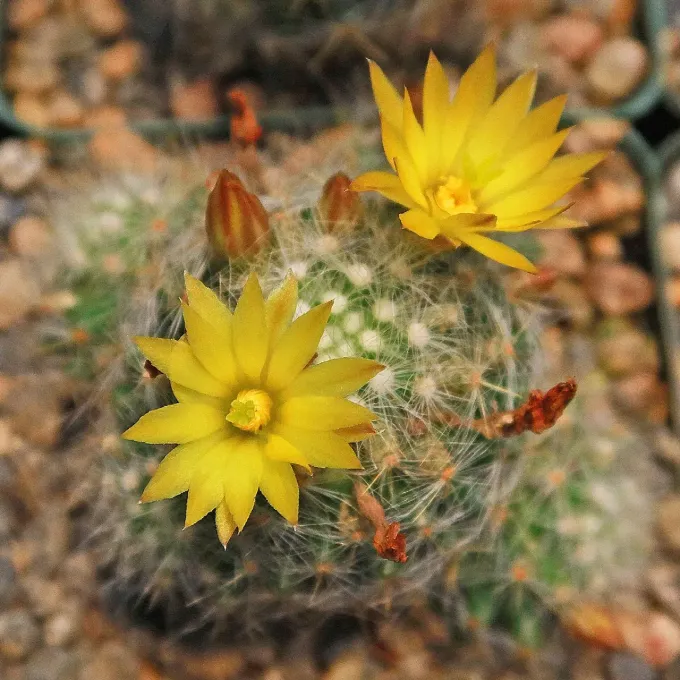
Mammillaria baumii is a charming, clump-forming species belonging to the Cactaceae family. It is native to the state of Tamaulipas, Mexico, where it grows on rocky slopes and thrives in well-drained limestone environments.
The cultivation requirements are centered on providing high levels of sunlight. This species needs at least several hours of direct light daily to maintain its structural integrity and encourage the production of its signature yellow, fragrant flowers.
Soil composition must be highly porous and mineral-based. A mixture of pumice, coarse sand, and a small amount of organic compost is recommended to mimic the natural rocky habitat of the plant and facilitate rapid moisture drainage.
Temperature management is critical for the success of this culture. During the growing season, temperatures between 20°C and 30°C are ideal. However, a significant drop in temperature during winter is necessary for the plant to enter dormancy.
Proper hydration strategy is essential for plant longevity. Watering should be deep but infrequent, allowing the substrate to become completely bone-dry between each session, particularly during the dormant winter months to prevent rotting.
Main diseases and pests
The most common biological threats to Mammillaria baumii are mealybugs, which often hide in the crevices between the tubercles or under the dense spines. They can significantly weaken the plant if left untreated.
Fungal rots, including stem and root rot, represent the most severe threat to the physical structure of the cactus. These are almost exclusively caused by overwatering or insufficient drainage in the potting mix.
Spider mites are another potential pest, especially in environments with low air circulation and high temperatures. They thrive in dry conditions and can cause unsightly scarring on the epidermis of the plant.
To control these threats, growers should utilize specialized systemic insecticides for pests and fungicide treatments if early signs of rot appear. Prevention through proper aeration is always superior to chemical intervention.
Keeping the crown of the cactus clean and dry is vital. If water gets trapped in the deep axils of the plant, it can lead to localized bacterial infections, potentially ruining the symmetry and health of the colony.