
Mammillaria voburnensis
Mammillaria voburnensis
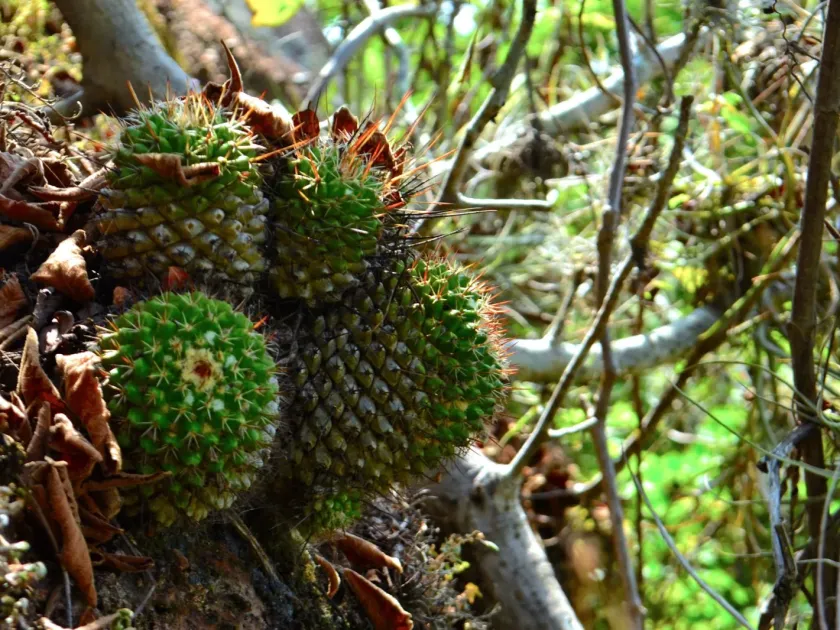
Description
Growing requirements
Mammillaria voburnensis is a perennial succulent species belonging to the Cactaceae family. Native to the arid landscapes of Guatemala, Mexico, and Honduras, this cactus is well-adapted to rocky, well-draining soils and intense sunlight characteristic of its natural habitat.
Botanically, the plant presents a globose to cylindrical stem structure, densely covered with tubercles (mammillae) which bear spines. These spines serve as both a defensive mechanism and an evolutionary adaptation to dissipate heat and collect moisture from morning dew or light fog.
Successful cultivation requires a porous substrate, typically consisting of coarse sand, perlite, and volcanic rock. It is essential that the potting mix remains low in organic content to prevent moisture retention, which can be detrimental to the sensitive root system of the cactus.
This species thrives under bright, direct light conditions. To maintain a compact growth habit and promote annual flowering, it should be placed in the sunniest possible location, such as a south-facing windowsill or a well-ventilated greenhouse throughout the active growing season.
Watering requirements are minimal; the substrate should be allowed to dry out completely between sessions. During the winter dormancy period, watering must be significantly reduced or suspended entirely to mimic the dry season of its origin, which triggers the onset of blooming in spring.
Main diseases and pests
Mealybugs are the primary pest concern for Mammillaria voburnensis. These small, cotton-like insects often settle in the crevices between tubercles, making them difficult to detect. Regular inspection and systemic insecticide treatment are necessary to manage potential infestations.
Root rot, driven by fungi such as Phytophthora or Pythium, occurs when the substrate remains waterlogged for extended periods. This condition is often fatal if not caught early, manifesting as dark, mushy spots at the base of the plant that indicate internal decay.
Spider mites are common in dry, indoor environments, especially during hot summers. They puncture the plant surface to feed on sap, which results in unsightly yellowish or greyish scarring on the stem, significantly weakening the plant and lowering its overall aesthetic value.
Preventative care involves ensuring proper air circulation and strictly avoiding overhead watering. Keeping the surface of the plant dry helps to prevent both fungal colonization and the accumulation of dust or debris that can harbor harmful pathogens and small pests.
If disease symptoms appear, it is recommended to isolate the affected plant and treat it with suitable copper-based fungicides. In cases of severe root damage, propagation via offsets or healthy cuttings remains a viable strategy to preserve the genetic line of the cactus.