
Mammillaria surculosa
Mammillaria surculosa
Description
Growing requirements
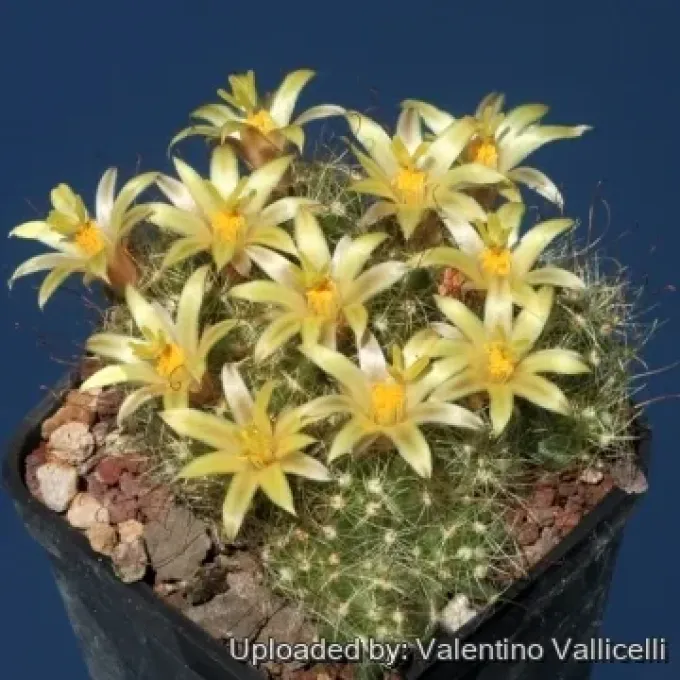
Mammillaria surculosa is a charming miniature succulent belonging to the Cactaceae family. Originating from the mountainous semi-desert regions of Mexico, this species is characterized by its clumping habit and bright yellow flowers that typically bloom during the growing season.
The cultivation of this plant requires high light levels, which are essential for maintaining its compact growth and proper spine development. It is best suited for placement in south-facing windows or greenhouses where it can receive direct sunlight for the majority of the day.
Soil requirements for Mammillaria surculosa are strict: it demands a highly porous and inorganic potting medium. A mix of sand, pumice, and a small portion of peat is ideal, ensuring that water drains away almost immediately to prevent the risk of root rot.
Watering practices should follow the cycle of the seasons. During the active growth period, allow the soil to dry out completely before watering again. During the winter dormancy, the plant should be kept almost entirely dry in a cool environment to mimic its natural habitat.
The primary use of this species is in ornamental horticulture and private cactus collections. Because of its small size, it is highly suitable for container gardening, fitting perfectly into indoor settings that provide the necessary light and temperature controls.
Main diseases and pests
The most common and lethal threat to Mammillaria surculosa is fungal infection, primarily root rot resulting from overwatering. If the substrate remains damp for too long, the root system decays, causing the stem to collapse and rot from the base upwards.
Mealybugs are the most frequent insect pest for this cactus. These small insects thrive in the protected areas between the tubercles and spines, where they sap nutrients from the plant, weakening its structure and potentially leaving behind a sticky residue that invites fungal growth.
Spider mites can also be a significant issue, especially in dry and poorly ventilated areas. They manifest as fine webbing or small yellow spots on the skin of the cactus, which, if left untreated, will cause permanent scarring and eventually the death of the cactus segments.
Preventive care involves frequent inspections and maintaining excellent air circulation around the plants. When pests are detected, systemic insecticides or targeted biological treatments should be applied carefully to avoid damaging the delicate epidermis of the cactus.
Sanitation is key to managing the health of the collection. Always use sterile tools when propagating or repotting, and ensure all pots have adequate drainage holes. By following these agronomic best practices, growers can ensure their Mammillaria surculosa thrives for many years.