
Mammillaria supertexta
Mammillaria supertexta
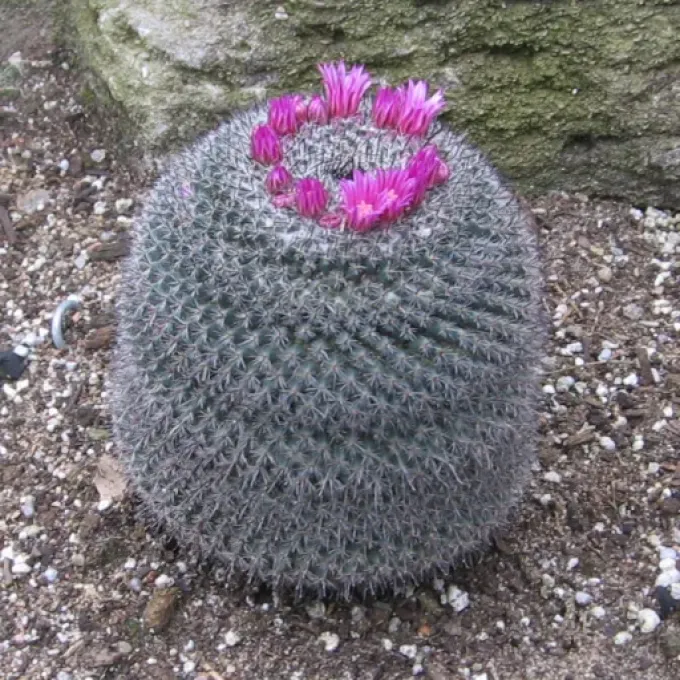
Description
Growing requirements
Mammillaria supertexta is a fascinating succulent species belonging to the Cactaceae family. Originally native to the highlands of Mexico, this cactus has evolved to thrive in rocky, arid environments with high sun exposure and well-draining soils.
Botanically, it is characterized by a spherical or slightly elongated stem densely covered in fine white radial spines. This structure acts as a natural shield, protecting the succulent tissues from intense sunlight and helping the plant retain moisture during prolonged dry spells.
For successful cultivation, the plant requires a spot with maximum solar exposure. In greenhouse conditions, it performs best when placed in a south-facing position. During the active growing season (spring to autumn), the plant benefits from warm temperatures and good ventilation.
Soil requirements focus primarily on drainage. A specialized cactus mix consisting of potting soil, coarse sand, and perlite is essential to ensure that water does not stagnate around the roots, as excessive moisture is the primary cause of decline in this species.
Watering should be approached with caution. The soil must dry out completely between waterings, especially in winter. During the dormant period, the plant needs a cool environment (around 10°C) and almost no water to successfully initiate the budding process in the spring.
Main diseases and pests
Root rot remains the most significant threat to Mammillaria supertexta. This condition is almost exclusively caused by improper watering practices or heavy, water-retaining soils that do not allow the root system to breathe, leading to rapid tissue decay.
The plant is also susceptible to common succulent pests, most notably mealybugs and spider mites. Mealybugs tend to hide in the axils of the tubercles, feeding on sap, while spider mites thrive in hot, dry conditions, causing fine webbing and damage to the epidermis.
Integrated pest management involves regular physical inspection of the plant body. If an infestation is detected, isolating the plant and applying targeted systemic insecticides or horticultural oils is necessary to contain the spread to other members of the collection.
In terms of agricultural and horticultural use, this species is highly valued in the nursery industry for its aesthetic appeal and ease of maintenance. It is a staple in many private and botanical collections due to its distinct, symmetrical growth pattern and attractive flowers.
Propagation is generally performed through seeds or by harvesting offsets that grow at the base of the main stem. While seeds require a stable, warm environment and consistent humidity during the germination phase, offsets allow for faster establishment of mature-looking plants.