
Mammillaria spinosissima
Mammillaria spinosissima
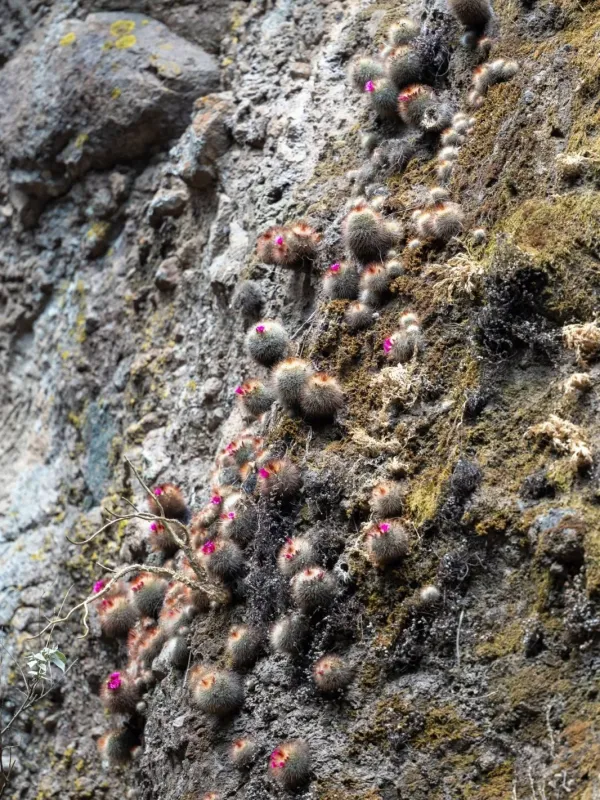
Description
Growing requirements
Mammillaria spinosissima is a popular succulent species belonging to the Cactaceae family, native to the mountain ranges of Central Mexico. It is characterized by its cylindrical growth habit and dense, colorful spines that cover the entire stem.
The plant requires a high level of solar radiation to maintain its structural integrity and encourage regular flowering, which typically occurs in the form of a ring of small, vibrant flowers.
The substrate must be extremely porous to ensure rapid drainage. A mix of pumice, perlite, and coarse sand with a small portion of potting soil is the optimal growing medium for this species.
Temperature management is critical; during the active season, it thrives in warm conditions, but it requires a cool, dry dormant period during the winter to trigger flower bud formation.
Watering techniques should strictly follow the soak-and-dry method, ensuring the substrate is completely arid between irrigations to avoid the risk of physiological stress.
Main diseases and pests
The most significant threat to this species is root rot, primarily caused by overwatering or insufficient airflow around the root zone, leading to anaerobic conditions.
Mealybugs are the most common pests, often settling in the dense spine clusters where they are difficult to reach with standard contact insecticides.
Spider mites can also cause damage to the epidermis of the cactus, especially when the ambient humidity is kept too low for an extended duration in indoor environments.
Biological control or systemic pesticides are effective against infestations, but it is essential to ensure that the active ingredients are safe for succulent tissues.
Maintaining proper hygiene by removing dead plant debris around the base of the stem reduces the likelihood of spreading fungal infections and attracting pests.